We’ve already been to Bogota. We weren’t supposed to be here. But, after a day in the Cartegena airport (yes, another entire day spent in another airport), which caused us to miss our connecting flight from Bogota to Quito, here we were with 1.5 days to kill before we could again fly to Quito. Good thing, it’s a pretty cool city.
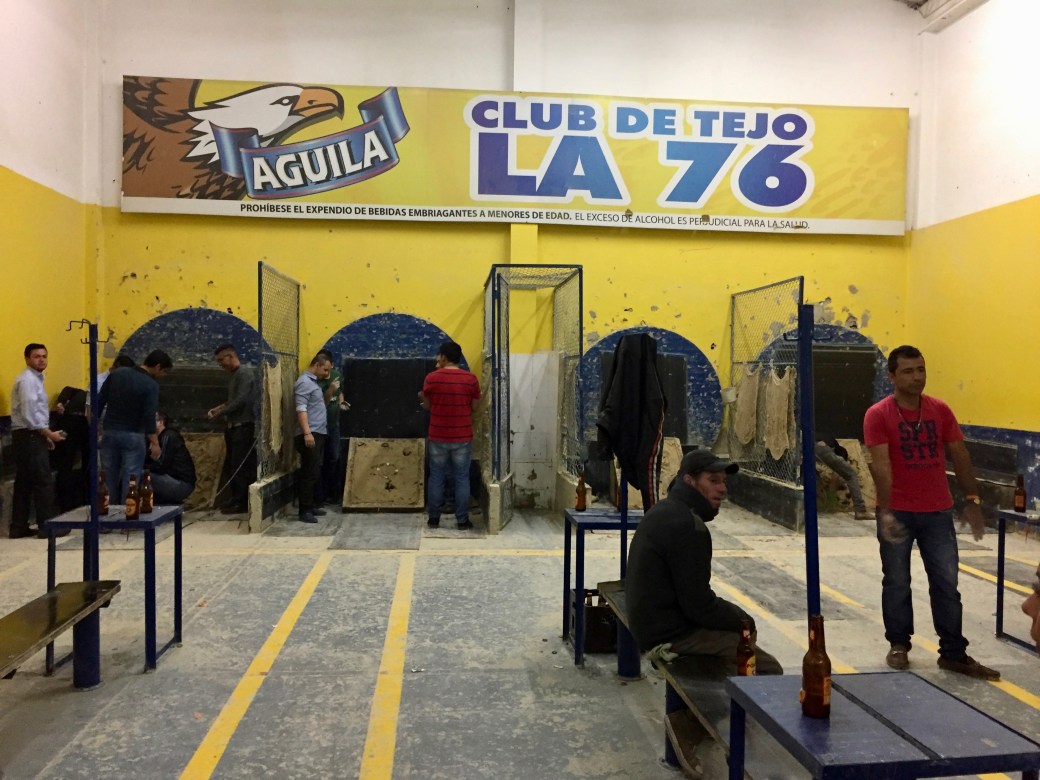
So, we found a pretty cool way to spend the time – tejo, the national game of Colombia. And, it’s only played in Colombia – a fact one local at the tejo hall was very proud of.
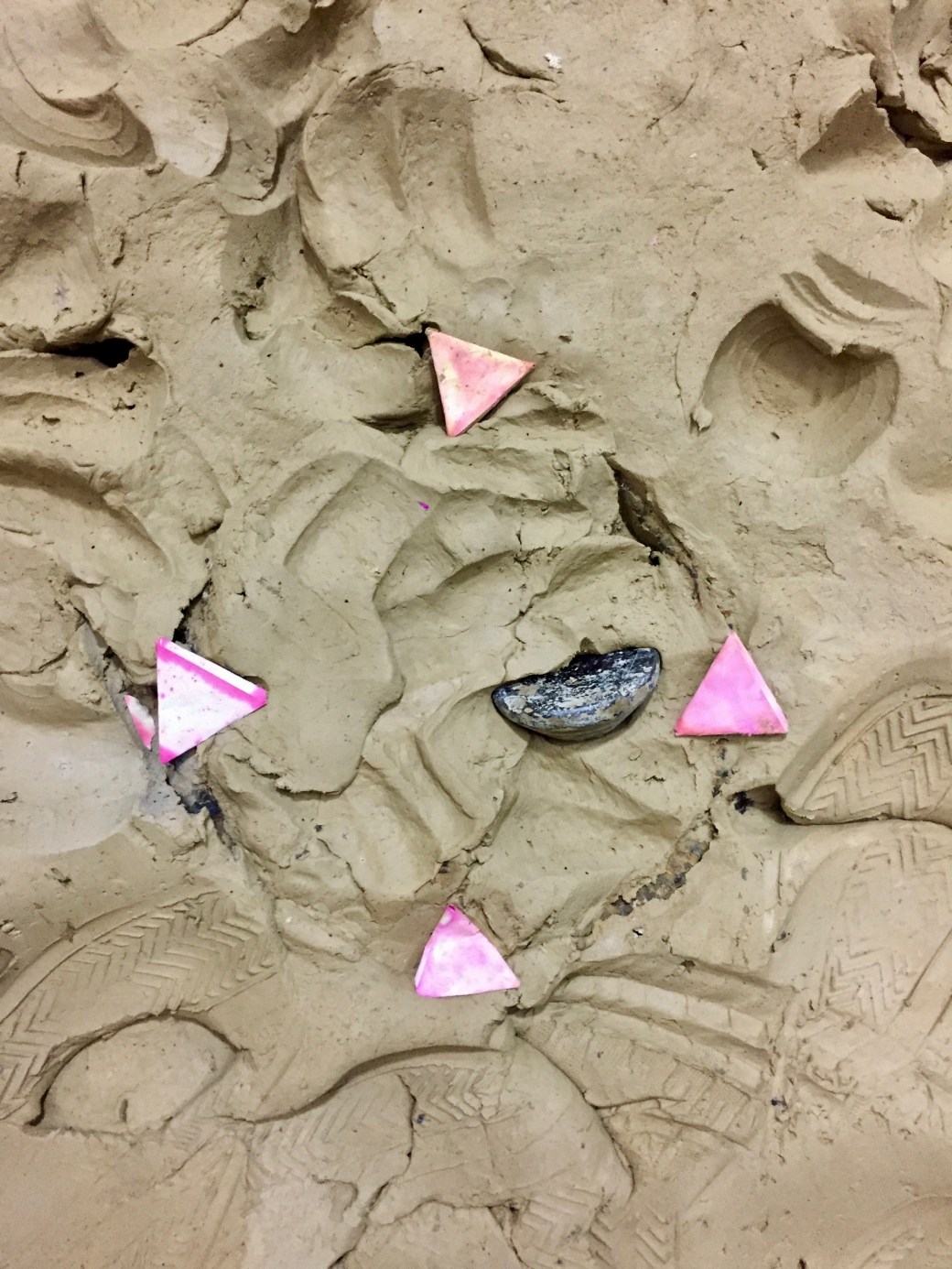
Tejo is pretty much a cross between bowling and cornhole, however you throw a somewhat heavy hockey puck type disc into a frame filled with clay and if you hit a target, gunpowder goes off.
This last part makes for a pretty interesting time, as the tejo hall can sound like a firing range.
The hall we went to requires 6 people for a game, so it sadly wouldn’t let Erwan and I rent a lane. Instead, we bought a few beers and sat down lane-side to watch the locals play. Jen befriended one of them with a montage of questions on what was going on, and they soon let us join in on a bit of the fun.
Like many games, it is quite male dominated (there were only 2 other women in the whole hall besides Jen) and the rules reflect this. If women play, they have a much closer line to throw from and a lighter ‘hockey puck’. When Jen threw, they insisted that she stick to these gender norms (as well as Erwan for his first time). That being said, the lone female of the group we befriended, hit the target more times than the guys. . .
Another thing to add is that tejo is pretty much a drinking game. Supposedly, you can’t finish a game until you finish at least a crate of beer. Scoring also seems to be optional and through our rough conversations, we still don’t really understand it – something about getting nine ‘hands’ of 9 points each. . .
So, combine bowling, cornhole, fireworks, heavy drinking, and a song playlist of Latin favourites – what’s not to like? It certainly could vie for one of the best games ever. . .
So after 2 weeks of a lot of rice and beans, we came to Cartagena and the food was something else! Maybe we hit better restaurants, but they were more affordable, so why not treat yourself. . . It also helped that when we arrived, our expat host in Cartagena gave us a few tips on her favourite restaurants. Considering we had already been to the city and done much of the usual sites, we might as well spend our time eating through the city, right?
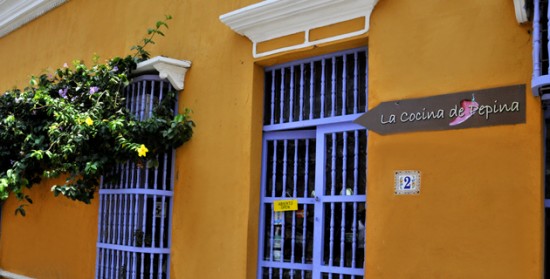
Our first night, we went to La Cocina de Pepina, a small restaurant in trendy Getsemani district. Described as hearty Caribbean Colombian food, it was definitely so, so, so good!
Erwan started off with a ceviche corvina (sea bass): On top of the standard red onion, lime juice and fish, it was served with plenty of secret herbs and sweetcorn. Very refreshing, zingy, and swimming in lime – just as Erwan likes it! Jen had a mash 4 ways which included plantain mash, cassava mash, and a combination of both served with chili sauce and sour cream. Cassava is usually quite dry, but with sour cream, it added softness to the texture. It was very unique, and for a vegetarian dish, definitely a good pick.
On to main course! Jen had borgnia, which was an eggplant puree to eat with dried plantain. Sounds pretty standard, but the secret herbs and spices did the difference (even Erwan’s subtle palette couldn’t really tell what they were). In Jen’s words – awesome! It did not taste like your regular Turkish babba ganoush, but had a real Caribbean feel to it. As for Erwan, he had caldereta camarones, a seafood stew in tomato sauce onion, garlic and clove served with yam crackers. The clove was subtle enough to give a twist to the stew, but not overpowering.
Verdict: excellent recommendation for higher end local food.
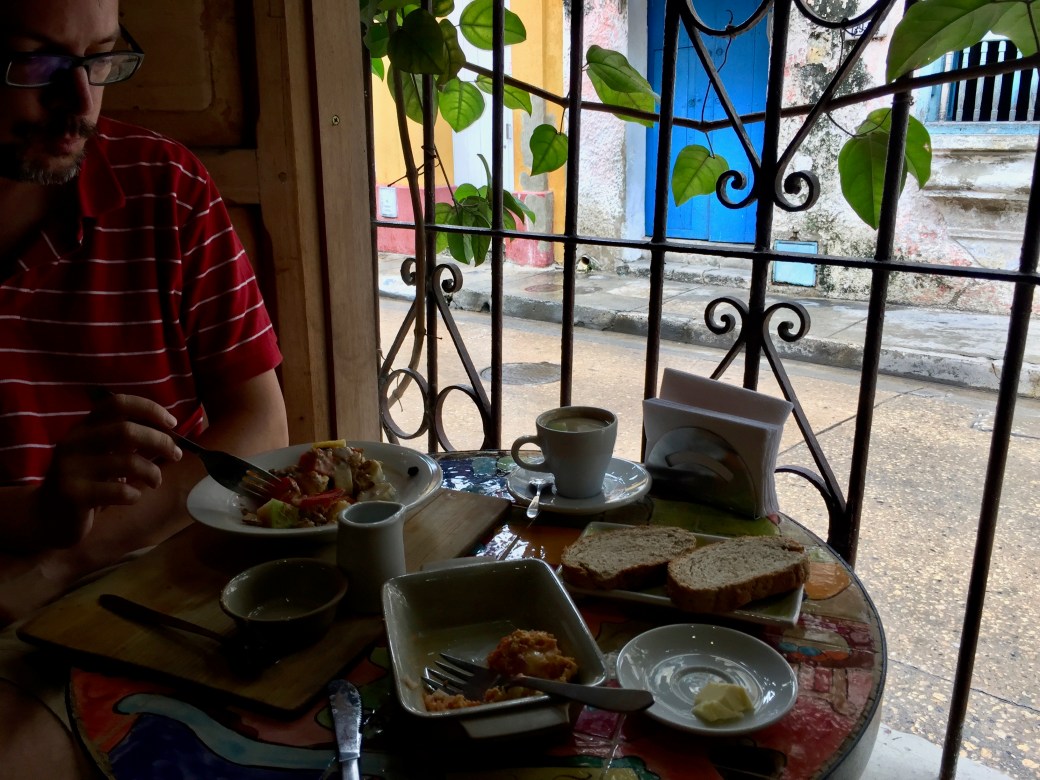
Next day, we had a breakfast again in Getsemani, in Belyu, a slow food cafe.
The vibe was cute, relaxed and kinda hipster. Jen loved their menu layout, which included a page on how the ‘new individual’ sought out living instead of owning as well as a ‘coffee map’ of Colombia showing their options and describing the difference based on region.
On to the eating, Jen had huevos pericos – scrambled eggs with cheese, tomatoes and onions, which came with homemade toast. Erwan had a plate of fresh local fruits topped with granola and yoghurt. The fruits of Colombia are amazing! So fresh and so unique, such as corozo, maracuya, and mora (look them up and if you can try them!). Seriously, people should visit this country for the fruit alone. . .
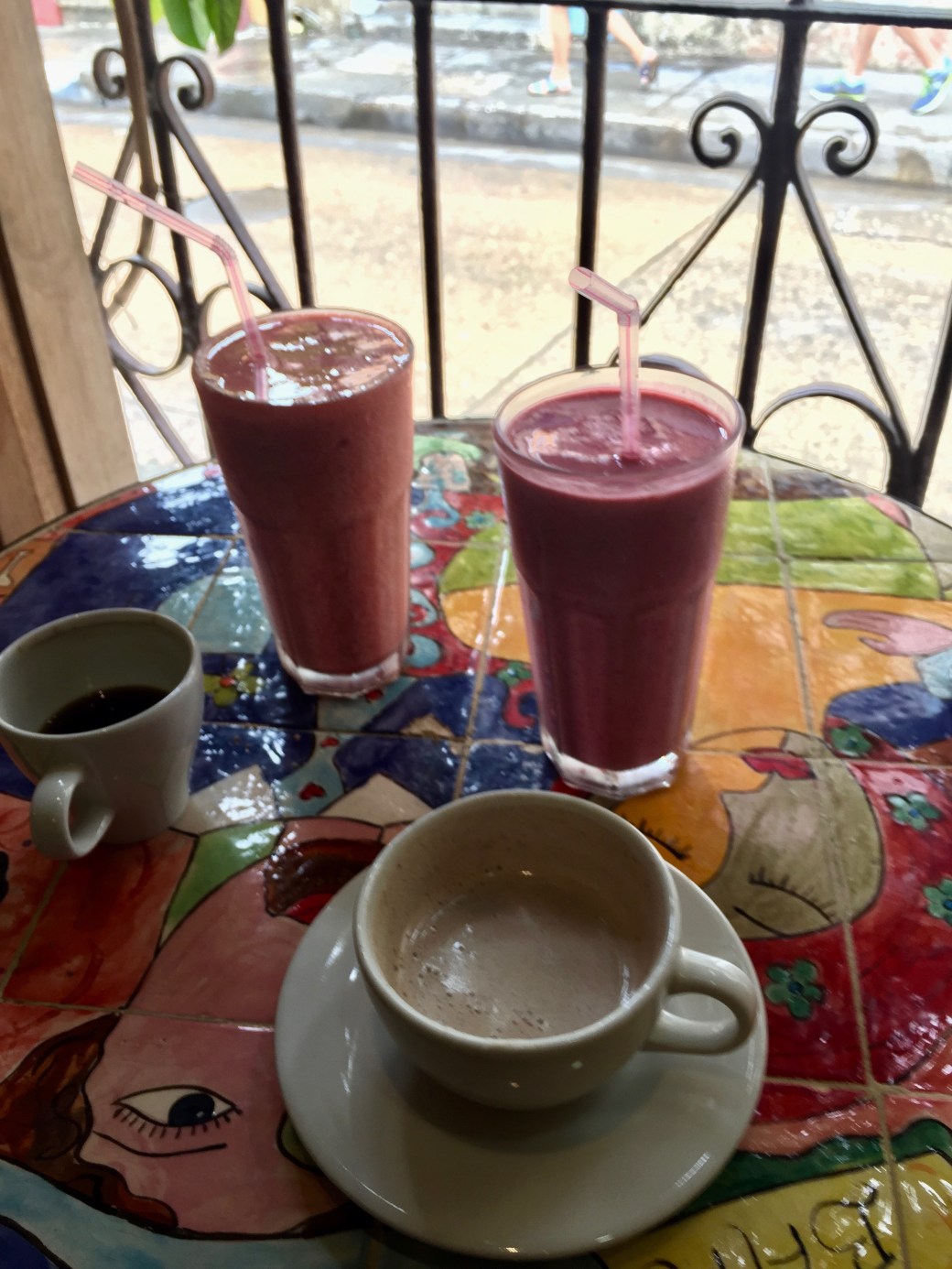
Anyways, breakfast consisted of very hearty portions, so we were full for the morning. But the highlight of the meal were the drinks. Even how they described them in the menu was interesting – for instance one stated “this fruit is a poetry of sips”. Erwan had a juice of passion fruit, corozo and orange. Corozo is a typical Colombian fruit, which apparently grows on palm trees. Its taste ranges between grape and blueberry. The combination of all 3 fruits in the juice worked very well. Jen had a ‘lojito lojito’ smoothie, which consisted of corozo (again), strawberry and blackberry – so sweet and tangy!
Verdict: Great place for breakfast or just coffee.
Due to such a large breakfast we just had snacks for lunch, so onto dinner. . .
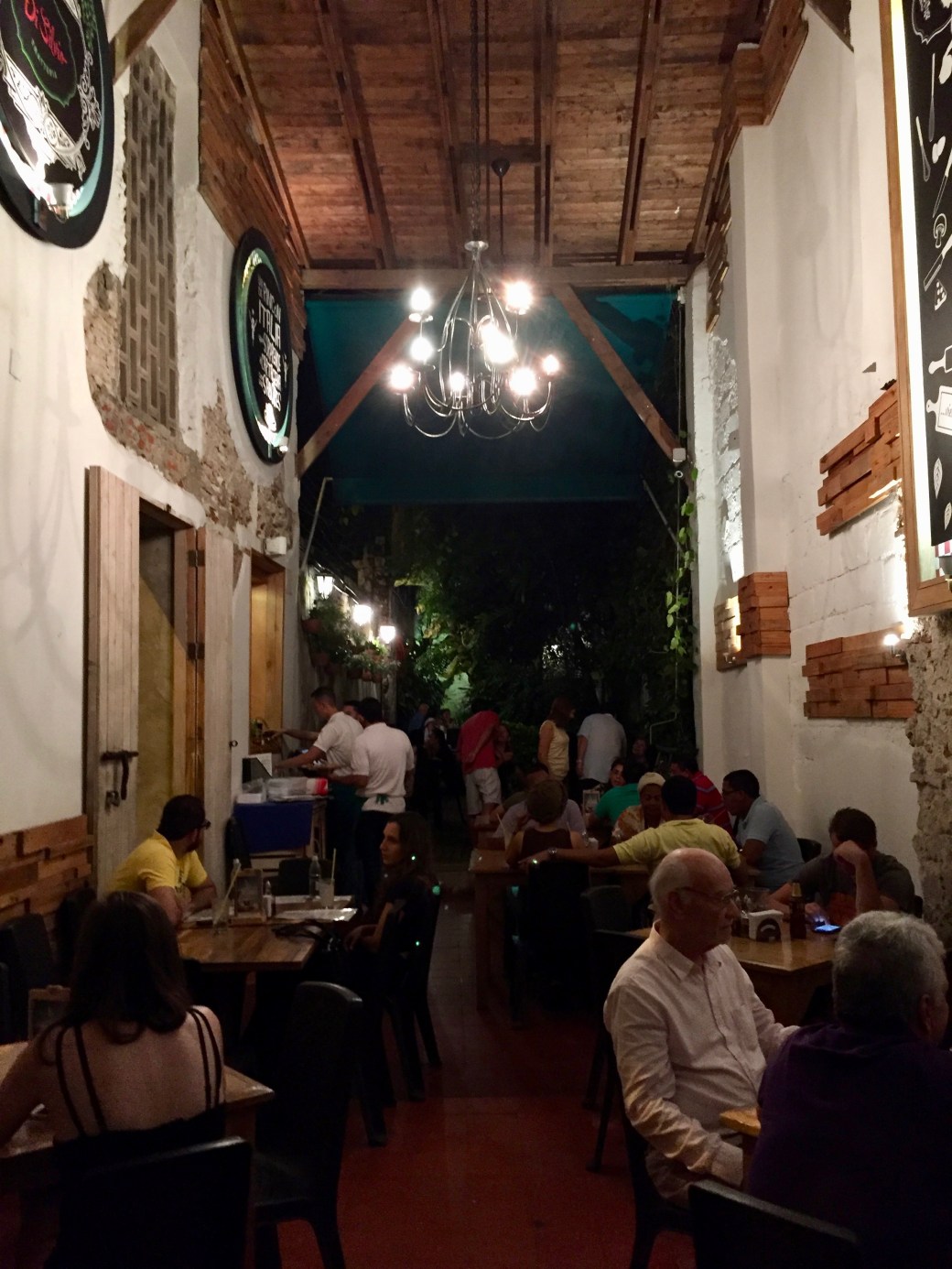
We were meeting friends for dinner (the Canadian couple who also didn’t get to go to the San Blas – see November 23rd post), so we went for easy pizza, at Di Silvio, the best pizza place in Cartagena – according to our host. The place was very trendy – a historic building done up with a contemporary interior that opens completely to the outside.
They had the standard pizza choices (margarita, hawaiian, etc), but we, of course, were going to try the original ones. Jen went for the ‘manzana’, which had blue cheese, apple and balsamic vinegar. The contrast of sharp blue cheese with the sweetness of apples, topped up with caramelised vinegar – A.MAZ.ING. Erwan had one with pancetta and prunes – once more contrast of salt and sweet, which was so, so very pleasant. Definitely two new flavours we will try to recreate at home, but not sure it will taste the same without the sea salt in the air. . .
Verdict: Great choice for unique pizzas.
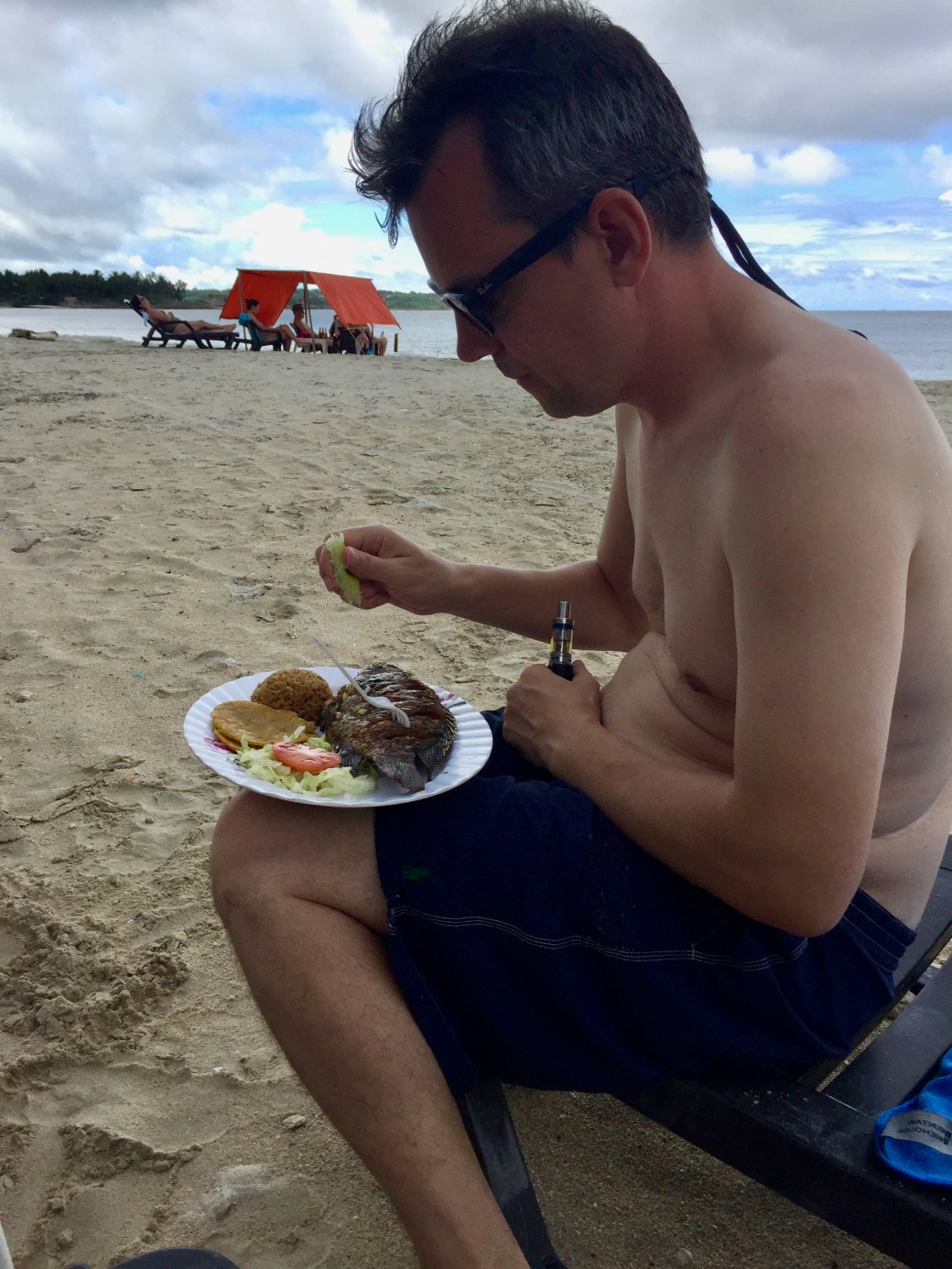
The next day, we spent the time at the beach – an experience to say the least (and not all good), but we’ll write about that in another post. On the beach we took a ‘menu del dia’ option. Jen’s was uninspiring, as many menu del dias are for vegetarians – rice, salad and french fries. The rice was decent though. Erwan’s was a bit better. A scary looking grilled fish, with a mohawk and 2 layers of bones… quite hard to eat with plastic cutlery provided, so after a bit of hand sanitizer, it was easier to eat with bare hands, picking the meat around the bones. It came with rice and uninspiring tomatoes and salad.
It was not on our recommendation list, and there might be a reason. The local stray dogs enjoyed the leftovers though. . .
Verdict: Avoid.
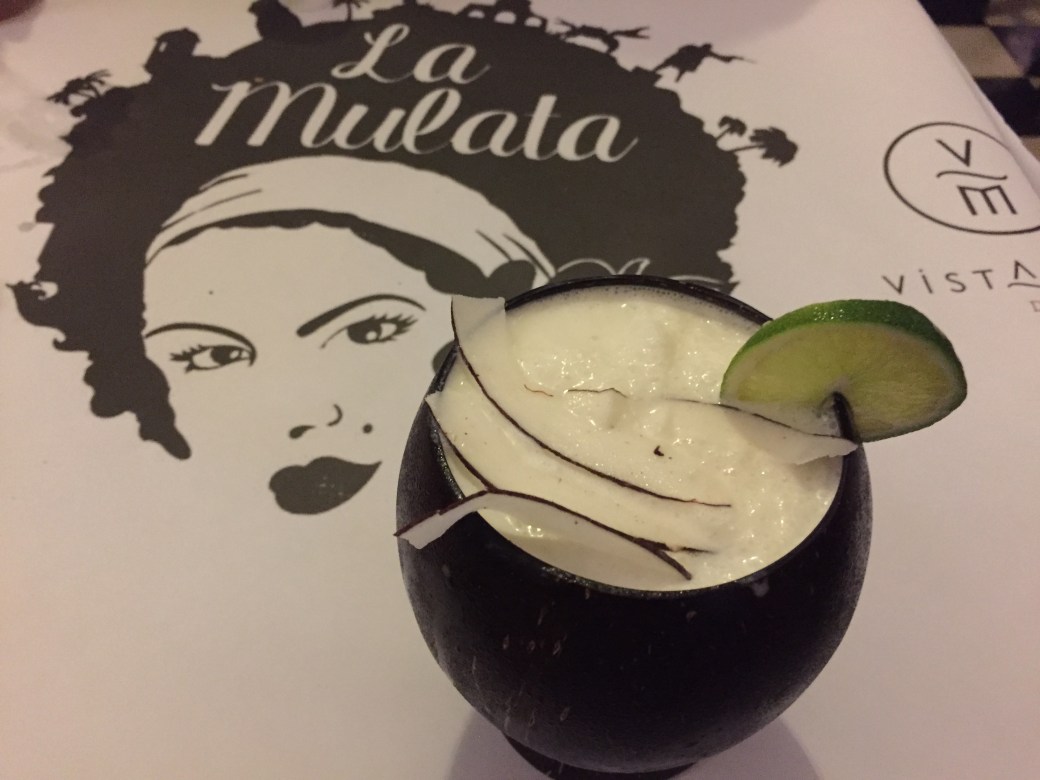
Away from the beach and back in the city, for dinner we went to La Mulata. When we arrived and sat down, we realised we actually ate lunch here the last time we were in Cartagena. Although it was mostly a local hangout last time, but after many raving reviews on TripAdvisor, it was now mostly packed with tourists. This has not changed their cuisine though. Their ceviche mixto, (squid, octopus and prawns) was very good. Jen went for fried rice with vegetables in coconut milk.
The highlight of La Mulata however, was their coconut limeade. Served in an empty coconut shell, both coconut and lime were perfectly balanced, neither overpowering the other and SO refreshing. Jen says it was the best limeade she’s ever had. She was in love, seriously, she’s salivating now thinking about it. Our only suggestion would be to add rum, and then it would be a drink made in heaven.
Verdict: YOU MUST DRINK THE COCONUT LIMEADE!
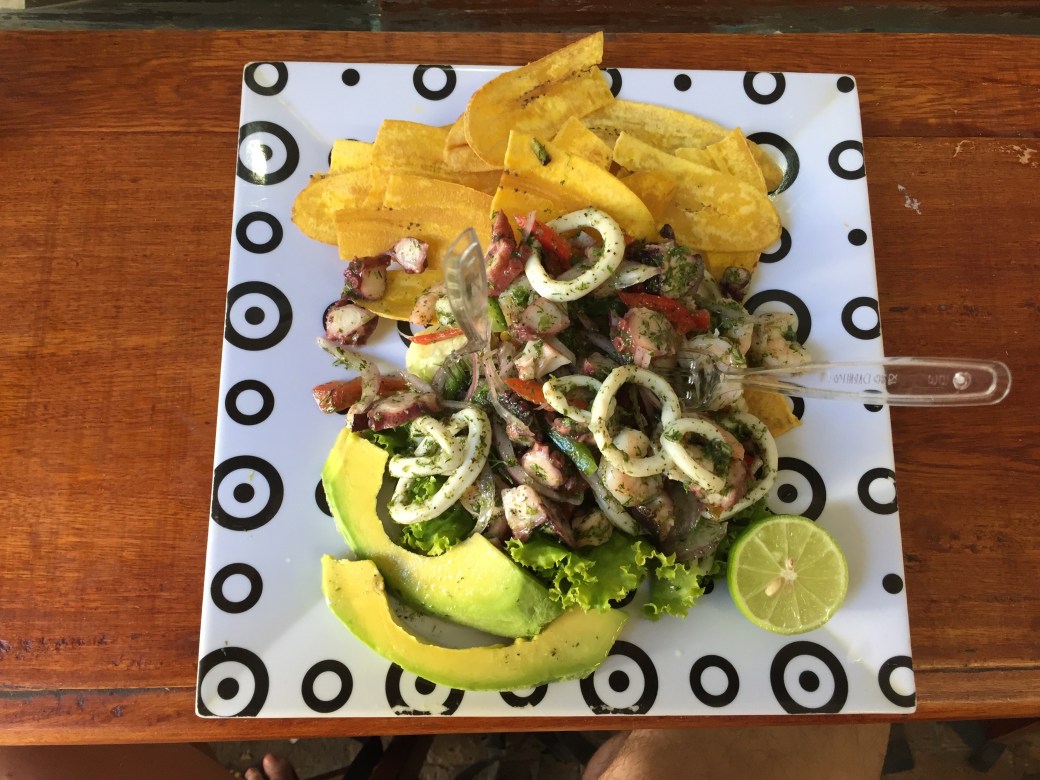
Onto Lunch on day 3. We went to La Laguna Azul – sold as the freshest ceviche in town and it did look like a local hangout for sure. It is just a cube in a shopping arcade with only 3 tables, and then 30 bar stools all around the restaurant. As a proper ceviche place, there was no vegetarian option, so Jen sat watching, while waiting for the verdict (she also ate the side avocado salad). Ceviche bomba was a ceviche mixto with extra chili. It was tasty, but not as good as at La Cocina de Pepina. Here, it was presented on a bed of salad, while Erwan likes his ceviche to be swimming in lime juice. Aesthetically, it was definitely nicer than your standard ceviche, but Erwan still prefers taste to aesthetics…
Verdict: Fresh, local, go for lunch.
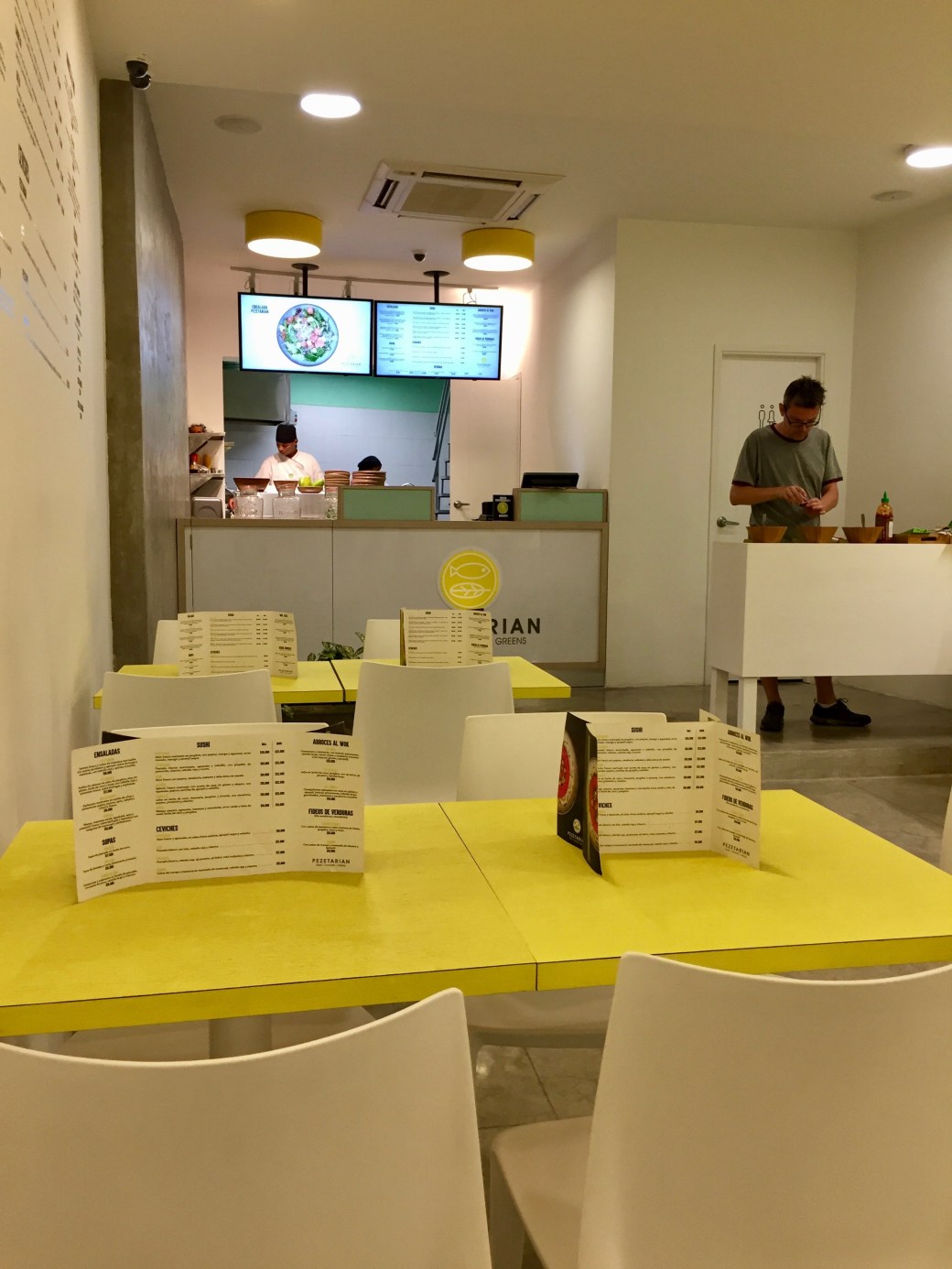
Our last meal in Cartagena (sad face) was a brand new looking Peruvian sushi restaurant, Pezetarian. The decor was characterised by lime green features, designer white counters, and sleek LED lighting. It would not be out of place in London!
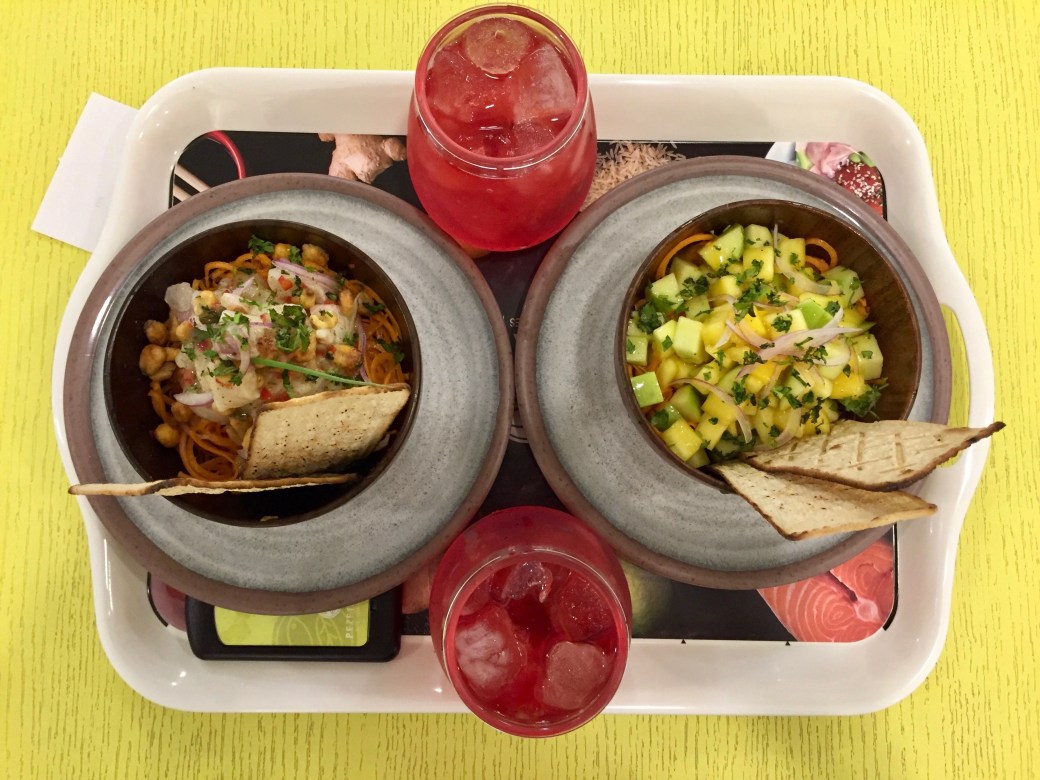
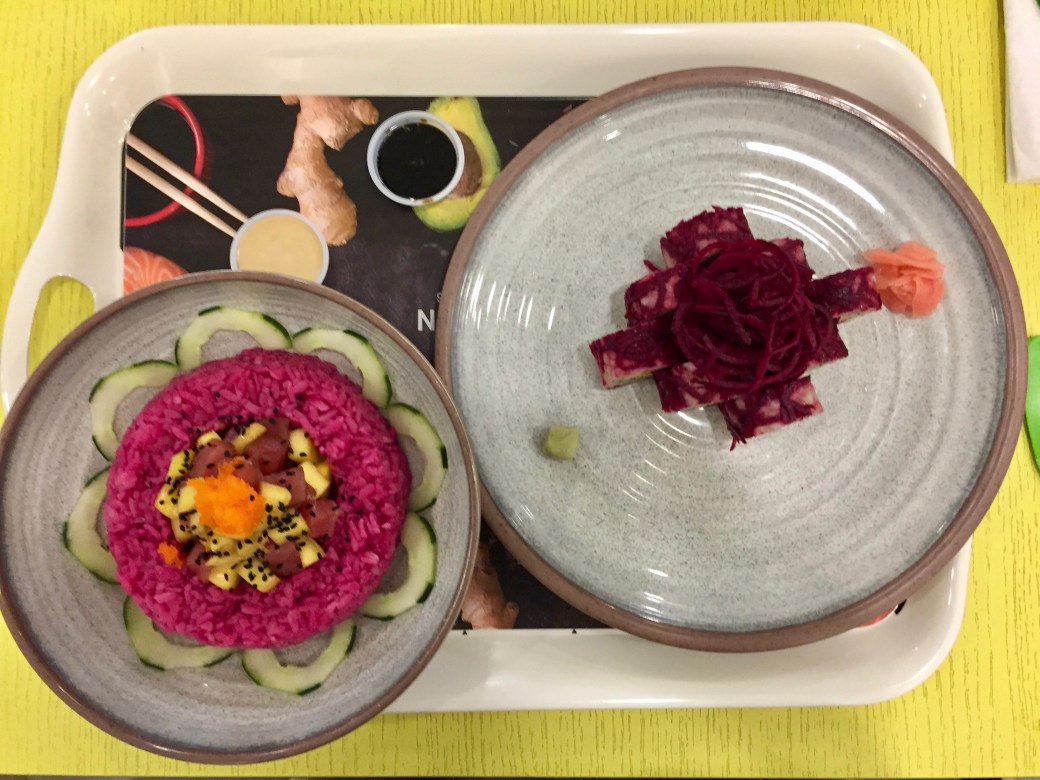
This was not recommended by our host, but had great reviews online for vegetarians – Jen was in! They specialise in ceviche and sushi, yet as a modern restaurant, visited by crazy foreigners, they have a vegetarian ceviche! Mango, cucumber, red onion, lime, chili – very thinly diced, so all cubes could soak up the lime juice. It was very interesting. Jen followed that with the green sushi roll. It was mostly avocado on the inside but covered in beets on top – it looked fantastic when served. Taste-wise, it was good, but not as unique as the veggie ceviche.
Erwan also started with a ceviche – seabass with dried sweetcorn. It was up there, probably in top 3 ceviches, but maybe after having had ceviche for every meal, it did not feel as special anymore. . .
The best part was the sushi bowl! The tuna and mango sushi bowl! Presentation was impressive again, with the diced tuna and mango resting inside a pink (yes, pink!) sushi rice ring, and a second ring of cucumber. Taste and freshness this time did not disappoint! And the sushi rice was perfectly cooked!
Verdict: Definitely go there.
So, in conclusion, if Jen liked the cats in Cartagena, for Erwan, it was definitely the food that won it. . .
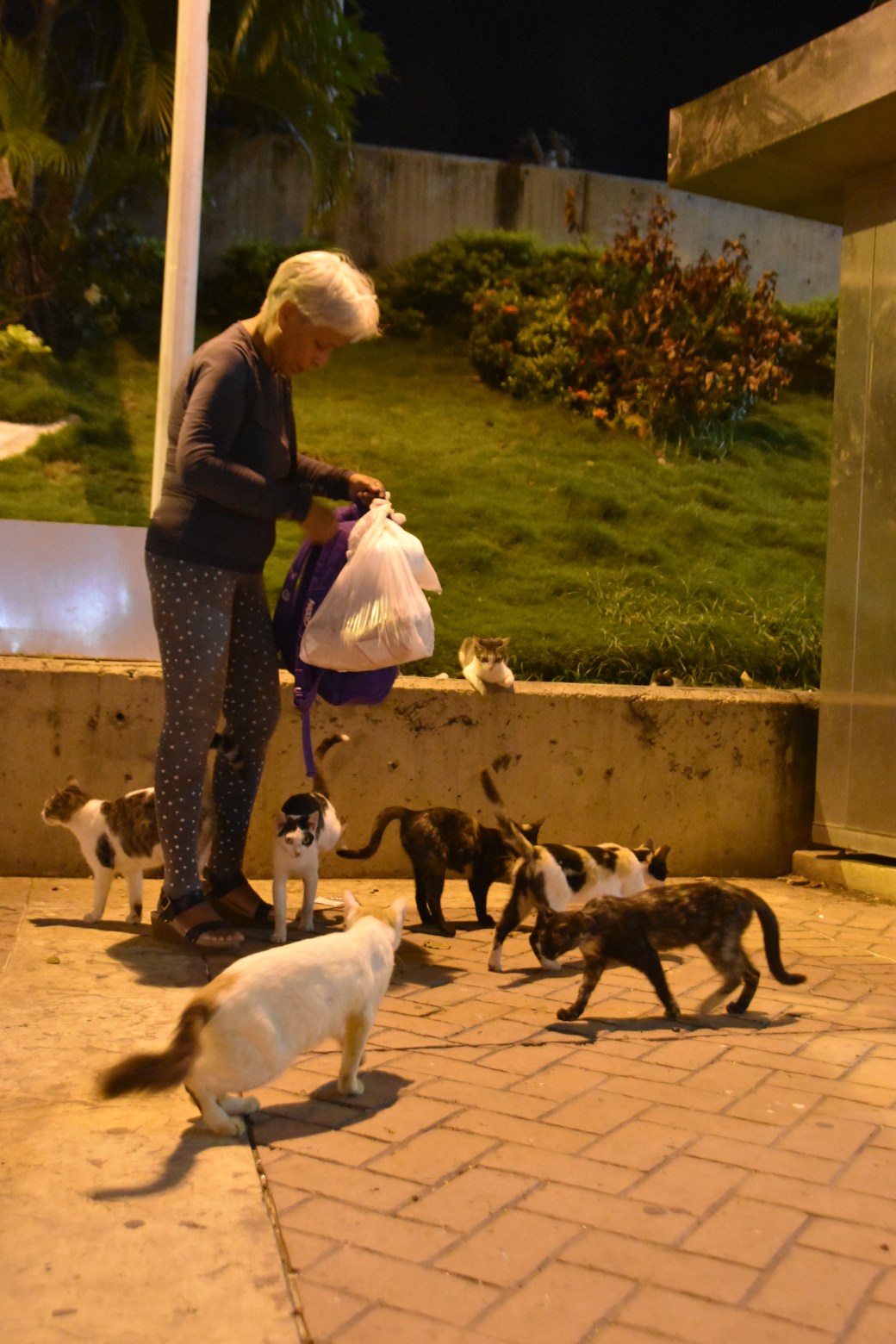
“Need to go. We’re heading out to see a mass feeding of all the stray cats in a local plaza.”
Yes, that is an actual message that Jen sent to a friend while chatting online and yes, the event is completely genuine.
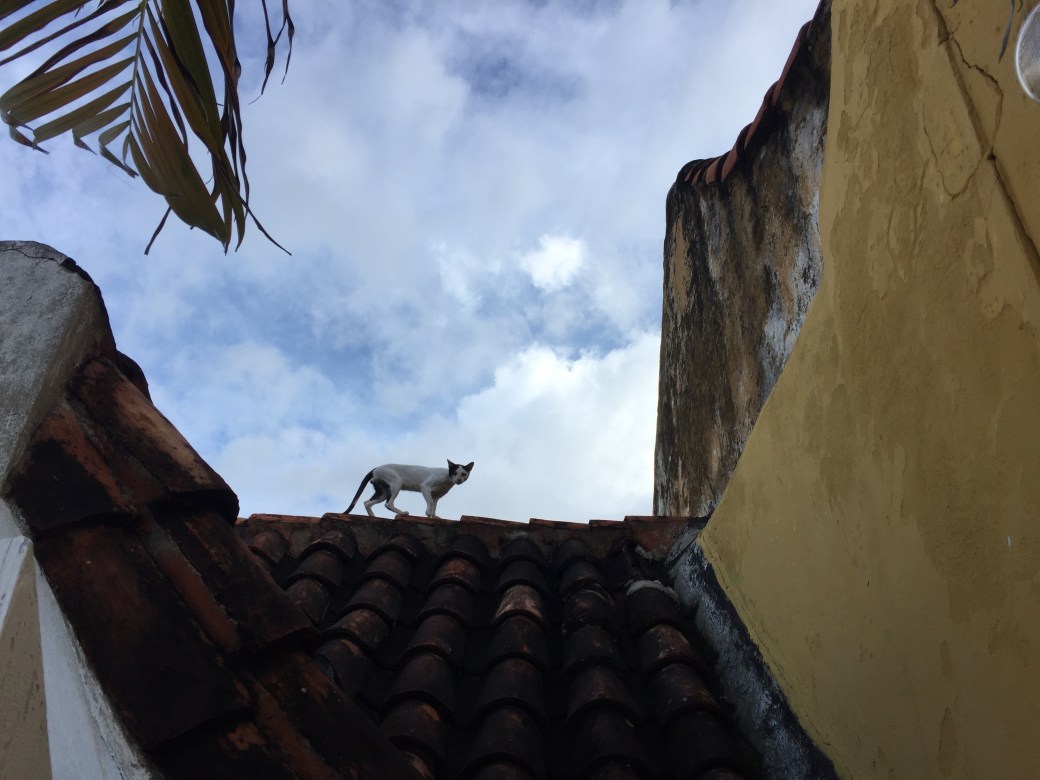
Like many seaside towns, in Cartagena, Colombia, there are tons of street cats. You only see them in the morning or in the evening – otherwise it’s too hot and they are way too smart to be wandering the streets in the sun. However, many of these cats are quite mingy – so mingy that even Jen wouldn’t try to touch them. Not that they would let her – most street cats would run away once you were a few feet from them anyways.
Jen still wants to help them. So to her joy, on our last day in this great city, we hear that in Plazoleta Joe Arroyo (not far from old town), there is a nightly ritual where older ladies feed all the local stray cats. Well now we have our pre-dinner plans!
Erwan brings beers; Jen brings her camera. Jen also speed walks to the plaza, as she’s concerned she’s late and will miss the spectacle. Fortunately, nothing has gone down once she arrives.
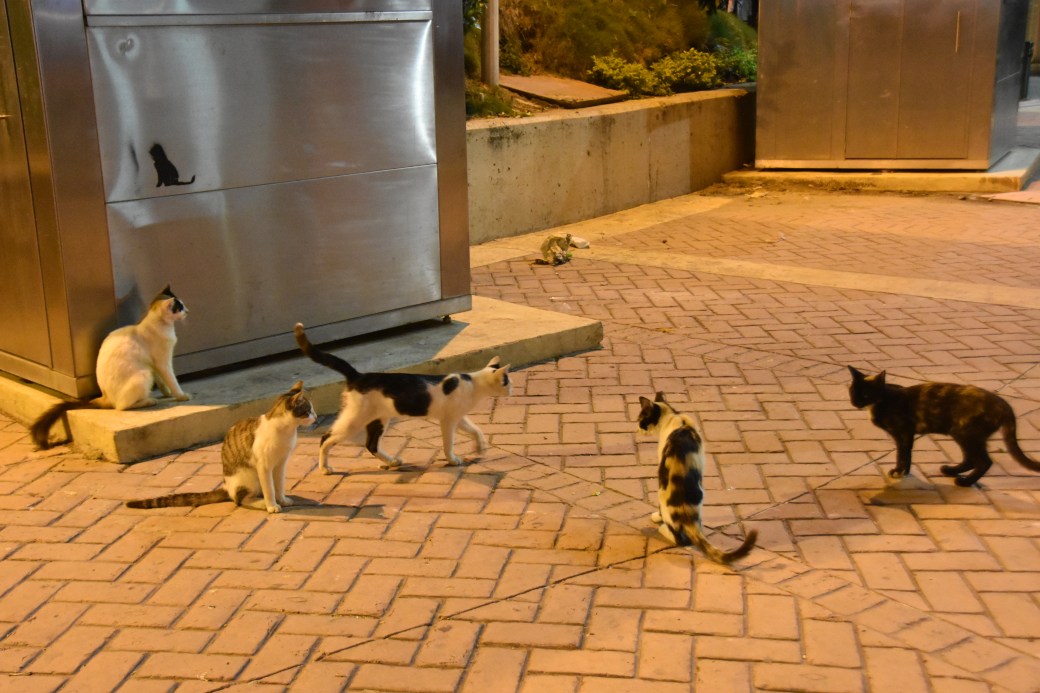
In fact, not much was going on in the plaza, so at first, Jen thought she maybe got the wrong place. However, in one corner, she saw a few cats congregating – as much as cats do congregate.
As per usual for strays in this town, not many wanted anything to do with Jen (although a few would stare her down).
Thus, she picked a nearby bench, hoped that this was the place and opened some beers. Within minutes of opening the beers, a woman came and said “hola”. Not only did all the cats present run to her, but others came out of nowhere to greet her as well. Yay, we were in the right place!
Feeding time began!
Besides taking photos, Jen got to help by breaking up mini spats and making sure the two kittens got fed. She also learned from the feeding lady some of the cats’ names and which one was sick (Nina, who got special food). And all the cats suddenly liked Jen! Or at least tolerated her. . .
Even Erwan was smitten with the little ones. . .
Twenty minutes, more than 100 photos for Jen and 2 beers for Erwan later, the cats started going their own way to sleep their feast off. How fun was that?!
In response to the beginning statement, Jen’s friend asked “is there anything you’re doing on this trip that doesn’t involve cats?”
So, following on from our Medellin post, San Jeronimo! Or more precisely, Hostal la Finca in the hills above San Jeronimo!
After our Hurricane Otto experience, we needed to make new plans fast, ideally cheaply and ideally involving something relaxing. After evacuating the Panamanian coast to the ‘big city’, we found a cheap flight into Medellin and then a cheap flight into Cartagena, which would allow us to keep our original plans there. So fast and cheap done, now for the relaxing. . .
We had already been to Medellin, but had heard great things about the mountains surrounding the city – beautiful scenery and nothing to do but hike and look at it. That should cover it. . .
We had specifically heard about a place called Hostal la Finca on the travel blog http://www.meganstarr.com
Jen actually knows Megan from high school, where although she was a couple years younger than Jen, Megan still kicked her ass on the basketball court. Megan is also a professional travel blogger, so we took her word for it and booked two nights at the Finca – we were not disappointed.
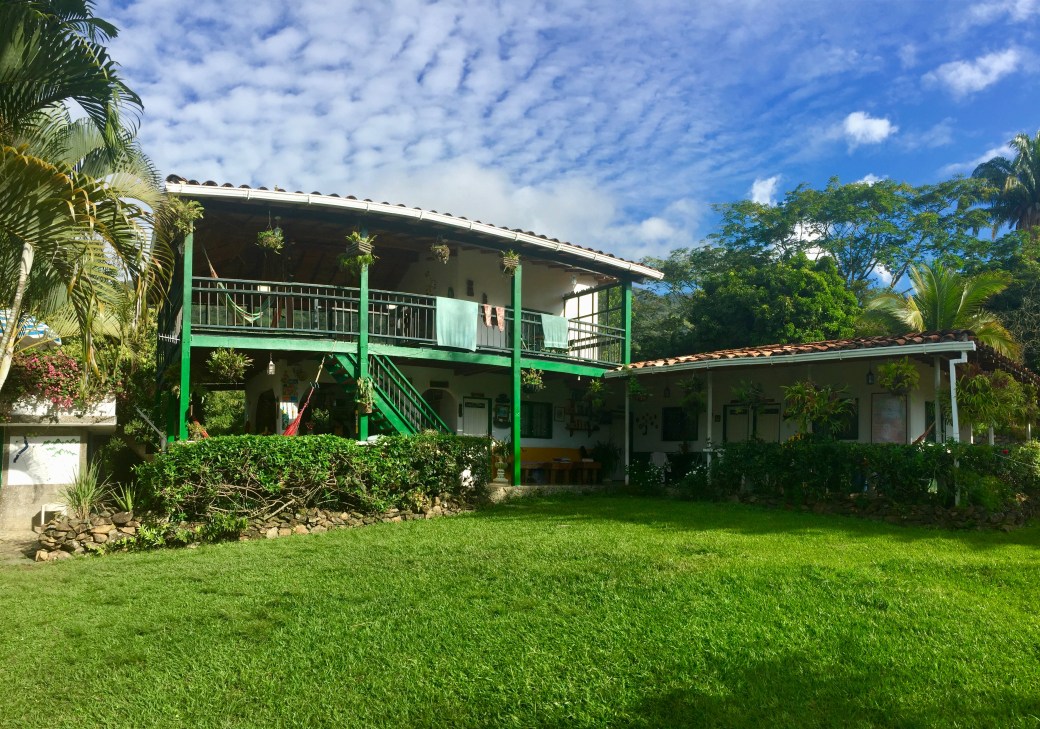
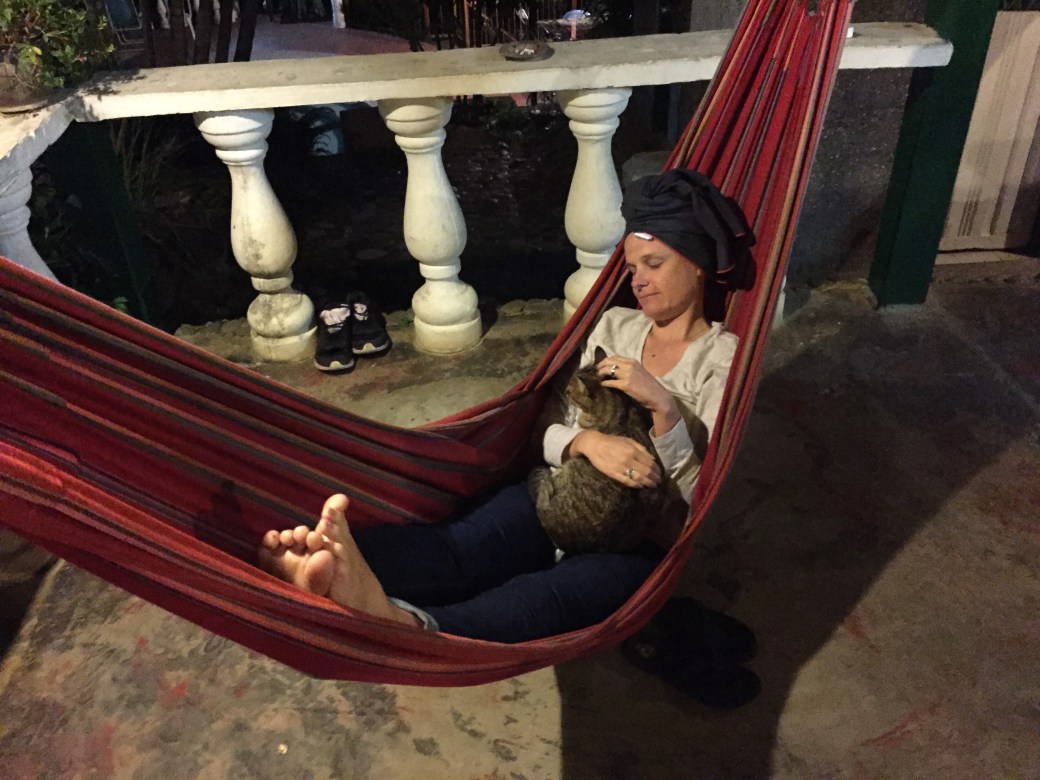
Following our brief adventures in Medellin, we got there in the early evening and were greeted by the two volunteers at the hostel, Grace and Jack. Both of whom were also from London. The really friendly owner, Alexis, was dealing with insurance issues in Medellin and we didn’t meet him until late the next day. We were also greeted, by the resident dog, Cana (who liked to follow Jen around) and the two cats, which we called Milo and Milo’s mom (we were told the little one’s name, but soon forgot it). Milo took a shine to Erwan and Milo’s mom was the perfect cuddle lap cat – particularly when in a hammock. Love!
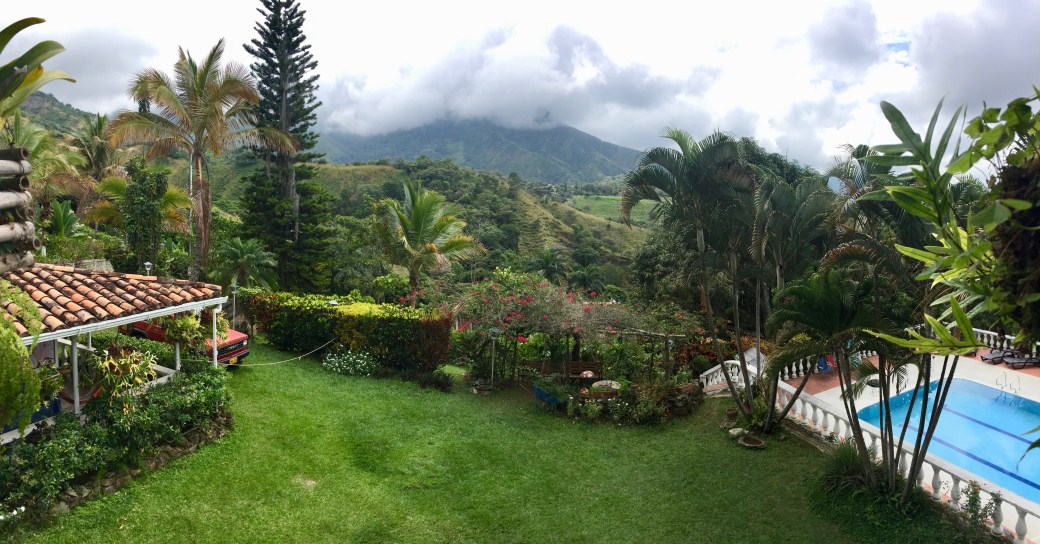
Grace and Jack gave us a quick tour – the place was gorgeous – as you can see!
It is also full of hammocks. Seriously, the land of 1000 hammocks. Pretty much every place there could be one, there was – I think we got that relaxing part covered. . .
Sadly, having booked last minute, we were not able to book the room on the second floor with the amazing deck and great views, but we still got a very comfy private room with ensuite. We also met our ‘neighbours’ – a nice young 20 something couple – and like everyone else here, from London.
After settling in, we went to enjoy a home cooked dinner in the kitchen (we prebooked a meal to be cooked for us, as we weren’t sure on when we’d arrive). And here’s where we should mention it was Thanksgiving. Jen hasn’t been in the states for Thanksgiving since 2001. Sometimes she celebrates in some fashion and other times not (it’s a working day everywhere else in the world). This year, we’ll count it as a celebration – a delicious home cooked meal, made by a local cook, in a beautiful setting, with a whole bunch of fellow Londoners – yeah, that’s a party.
The day (mostly the bus ride and tuk tuk to get to the Finca) also allowed Jen to reflect a bit on the past few weeks. We are truly blessed to be able to be taking this worldwide adventure together and although it hasn’t been ‘smooth sailing’ (pun intended), we’ve already had a really good time. Travel and adventure is one of our passions and we are truly thankful that we have opportunities to pursue them and are able to do so together.
After dinner, we stayed around drinking and chatting a bit and then Erwan went to bed (at 40, he was the old man of the group and could theoretically be the father of any of the other 4). Considering it was a holiday, Jen stayed up with the youngsters, playing cards and drinking. The age difference was apparent – they did not get several of Jen’s cultural references (truffle shuffle?), nor did she understand all of theirs. Furthermore, she did not know/enjoy some of their music, although she did do well at cards. Shortly after midnight, her age caught up with her, so she went to bed, while the kids continued their party.
The next morning, Jen woke up to a hangover, while the kids woke up and did circuit training by the pool.
Due to said hangover, Jen spent most of the morning testing out the hammocks (we like to say extreme hammocking), remembering a time when she too could drink away the night and then go for a run (or a ski race) the next morning. . .
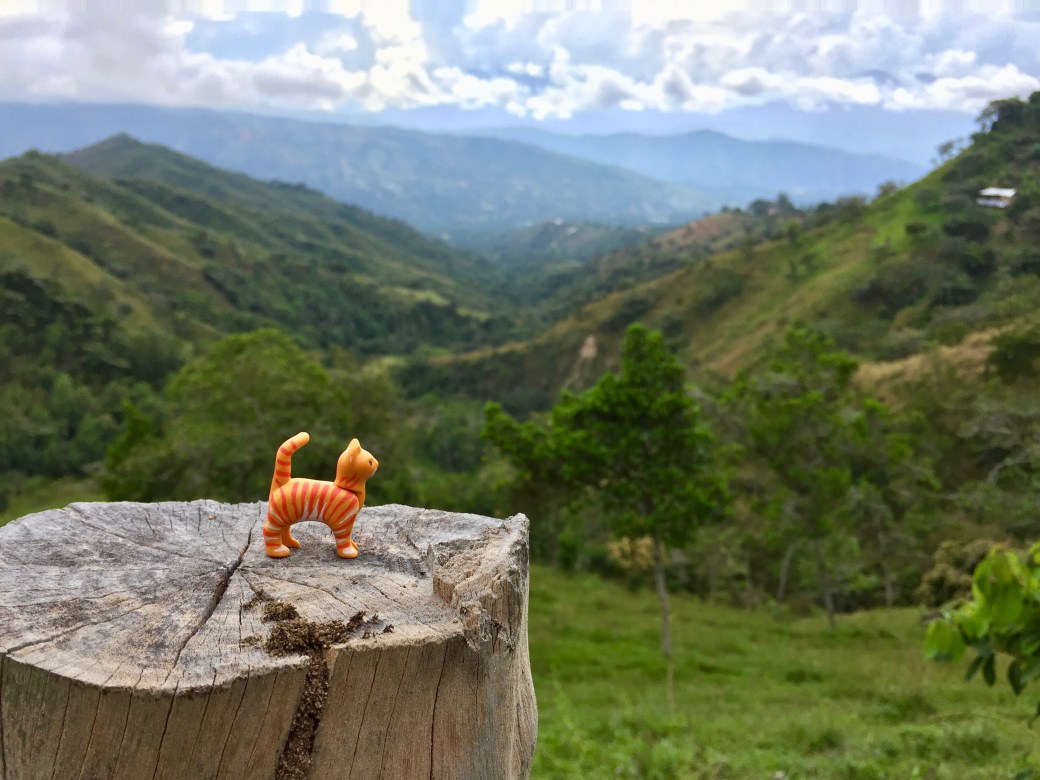
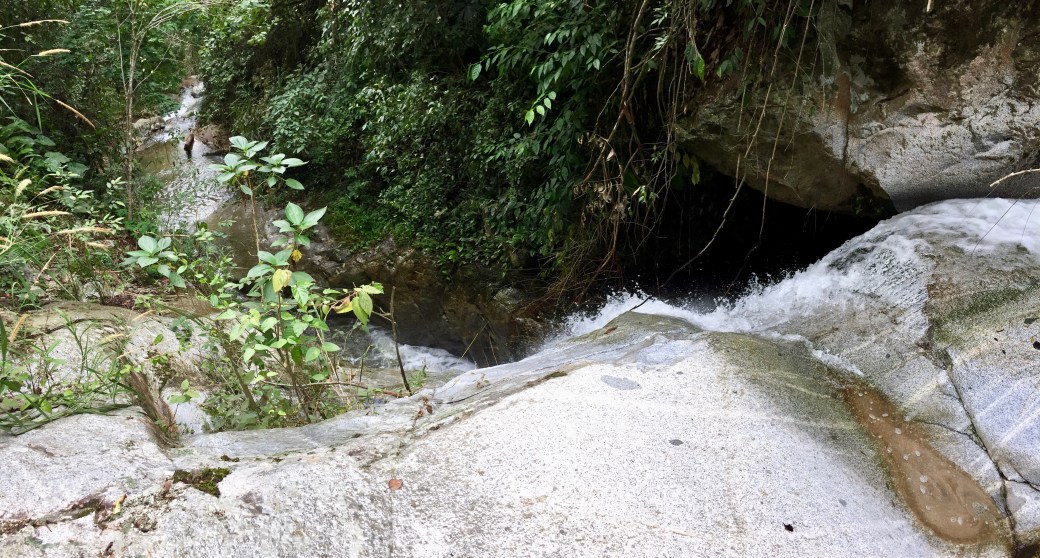
After lunch, we went for a hike to a local ‘hidden waterfall’. The views were amazing along the way – even petit George enjoyed the hike.
However, the waterfall certainly was hidden! The path we followed led to the stream and then stopped. The written instructions we had from the hostel, simply then said “continue downstream”. With no path to follow, we did just what it said – by walking in the stream. Due to rapids, rocks, etc, it was a bit tricky at times – but oh, so much fun! Jen, particularly, loves these off-piste adventures.
We got to the top of the waterfall, but could not find safe passage down to the bottom. Erwan went ahead as a scout but came back with a few bruises – no bueno. We were tired by that point (and one of us still a little hung over), so we decided to head back, rather than (with our luck) have one of those ‘stuck in the jungle stories’.
On the way back, we stopped at the one local tienda in the area, La Fonda de Don Abraham, and had a couple of beers while enjoying a chat with the proprietor, an adorable little old man. Yea, we didn’t understand much of what he said, but he still spoke to us.
That evening, we both called it an early night after dinner (as well as a little kitty hammock cuddle) and did not join the ‘kids’ for another drinking session down by the pool. Good thing too! Even the youngsters woke up with hangovers the next day – god, knows how Jen would have been. . .
Well rested, the next morning, we went for another hike – this time shorter and less off piste. And Cana, the dog came with us!
After the hike, it was sadly time to head off and catch our flight to Cartagena. However, mission accomplished! Between the hiking, the pets, and the extreme hammocking, we were both super relaxed and ready for our next more intense adventure. And really thankful that we even get to have one. . .
Ok, we should start by saying this title is probably a bit misleading. This is not a post suggesting what to do if you only have 24 hours in Medellin. This is our second time to Colombia’s second city, so we had already done most of the “must dos”. Instead this describes how we spent our (actually less than) 24 hours in the city following Hurricane Otto ruining our original plans.
If you do only have 24 hours in Medellin, we would suggest the Botero museum, walk around that area a bit, grab lunch from one of the street vendors and then either go to the Botanical Garden or the cable car (see below on the latter).
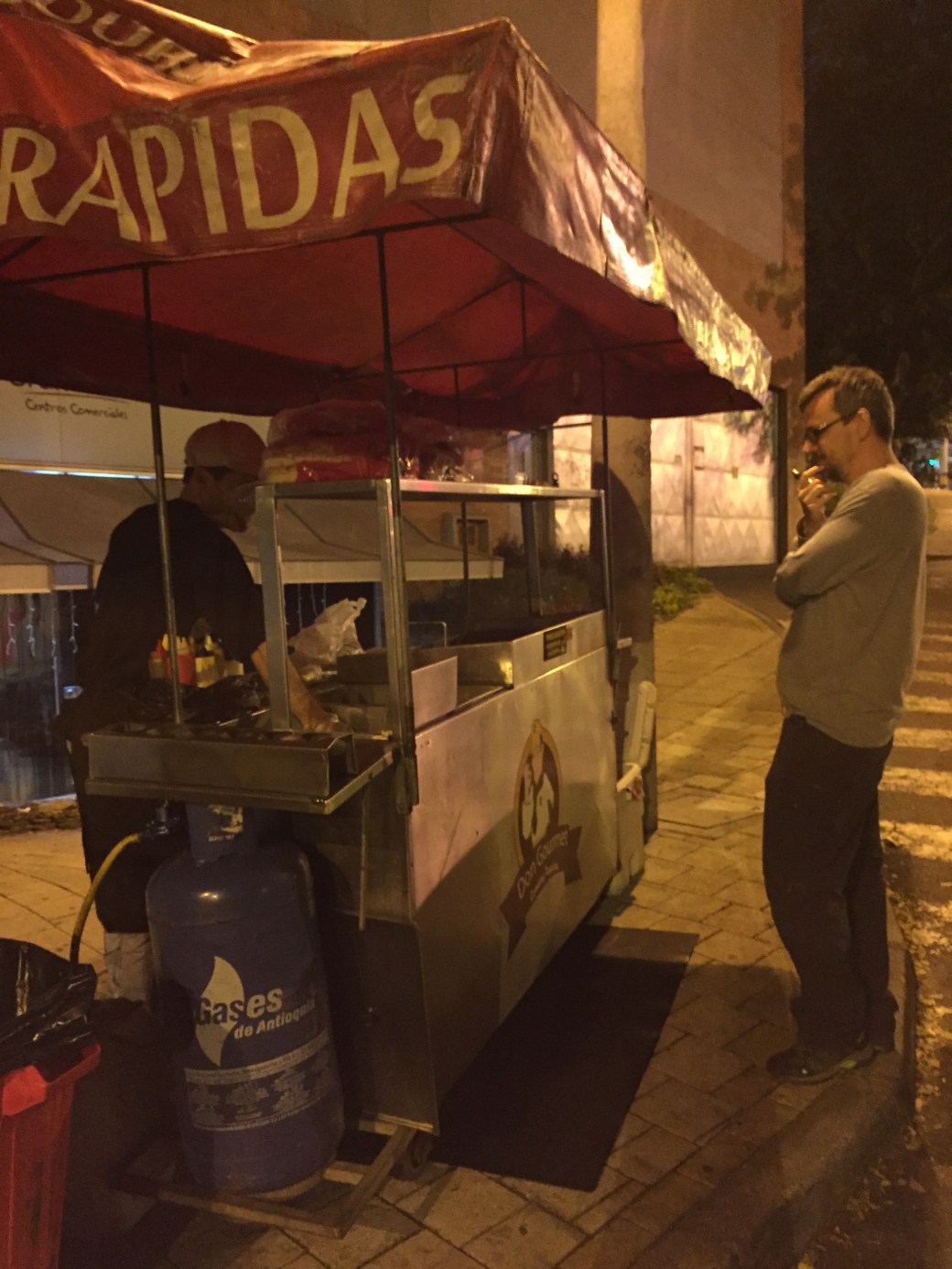
I digress. So, we started our time in Medellin late, since our flight was delayed and once we did arrive, they only had 3 people working customs for a few international flights. Since we were only going to be in town less than a day, we were crashing at a friend of a friend’s place. We arrived around 10:30/11 in a very residential area and were starving. Given the time, we were concerned about our dinner options, however our host suggested a little hot dog vendor on the corner of his street. Being vegetarian, Jen was a bit sceptical, but we headed out. At the very least, Jen saw a local ‘tienda’ that was still open, where she could possibly get some chips or a granola bar.
Oh, ye of little doubt! We both were able to eat at the hot dog vendor and it is now tied for first place of all hot dog vendors in the world (the other being in Toronto). Don Gourmet (the vendor) is run by a really friendly guy, who when he heard us speak English to each other, immediately started speaking to us fluently. When we first arrived, Erwan asked if he had any vegetarian options and his response was “yes, I can do something for her”. Interesting how he knew Jen was the veggie – I guess no self-respecting Colombian man would consider being such. . .
When the man asked Erwan for his order, Erwan responded “something good” and the man’s response “I have just the thing for you”. It wasn’t a hot dog some much, as a skewer of chicken, that was marinated in garlic sauce, chilli sauce (which the man grows and makes himself) and of all things, Coca Cola. It was then added to freshly baked hot dog bun along with melted cheese, shredded potato chips and a medley of sauces. Sounds pretty basic, but to the foodie that is Erwan, it was A.MAZ.ING.
Jen’s vegetarian option was also really good. He grilled some kind of salad medley (lettuce, carrots and something else) in the same sauces as above, added a whole bunch of cheese and topped it off with fresh salad, more sauces and those shredded potato chips. Seriously delicious!
And to top it all off, after we ate the ‘hot dogs’ (btw, he did sell normal hot dogs as well, as another patron came for one while we were there) and chatted to him a bit, he gave us some lollipops for desert. So bottom line, if you are ever in Envigado, intersection of Calle 19 and Avenida El Poblado, go have some great street food from Don Gourmet!
When we woke up the next morning, our host had already left for work, however we were greeted by his cat.
As you can see she was not happy about having guests. She was lukewarm the night before when we met her, but now, she was wondering what the hell we were still doing on her turf. While we got ready to attack our day, she spent the time either staring us down or hiding behind the fringe.
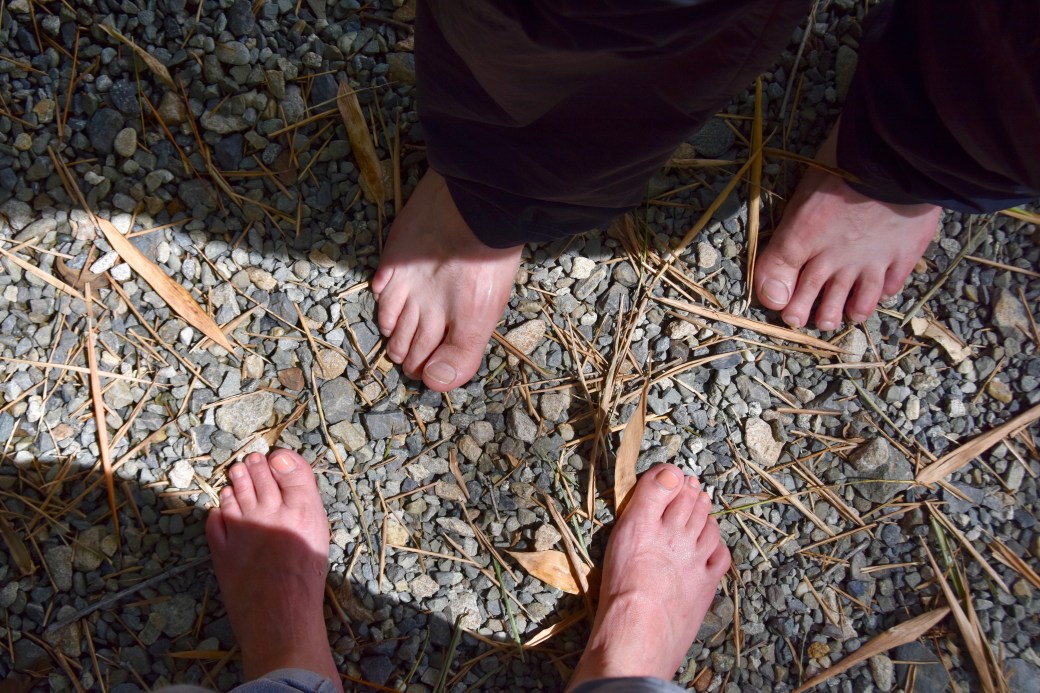
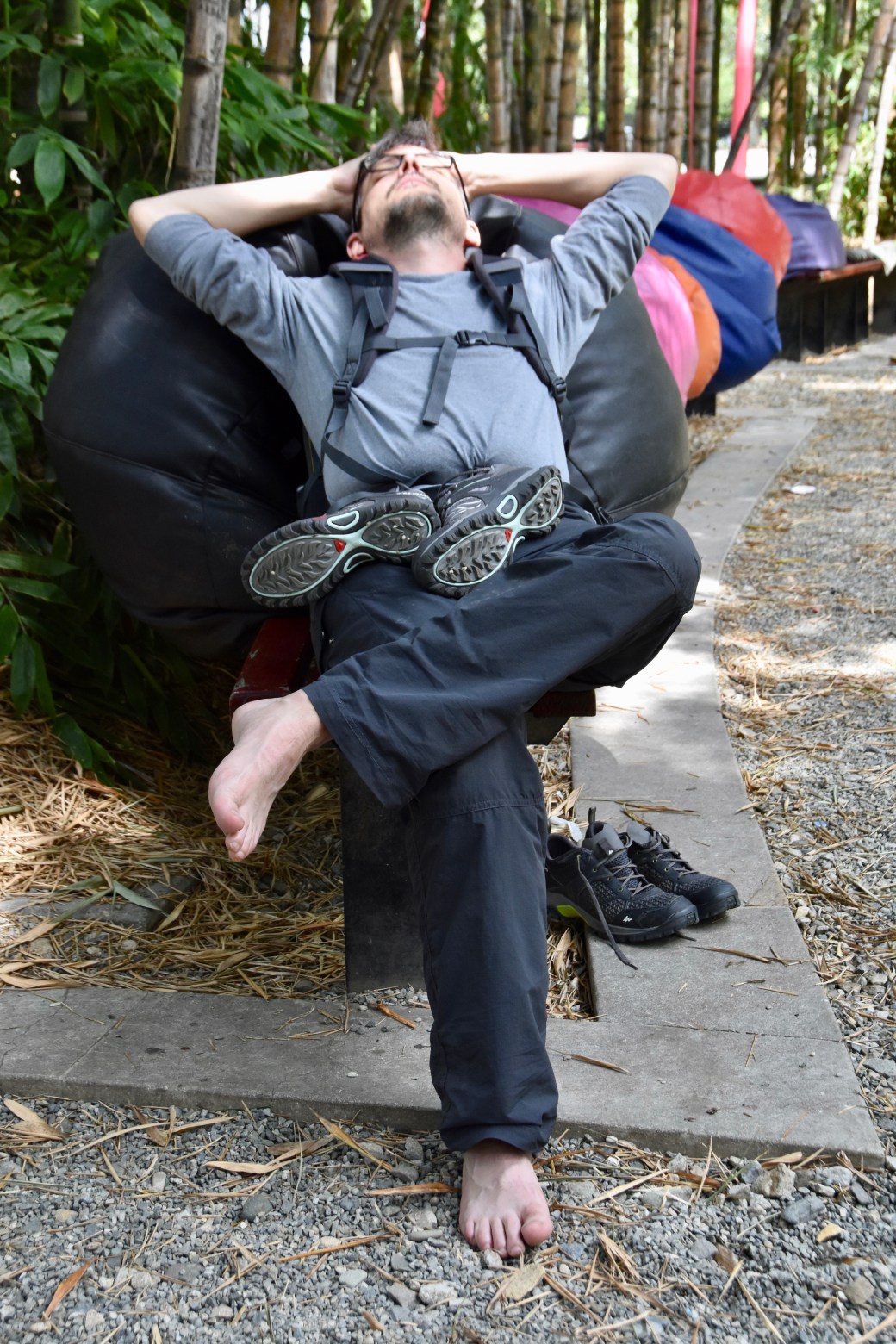
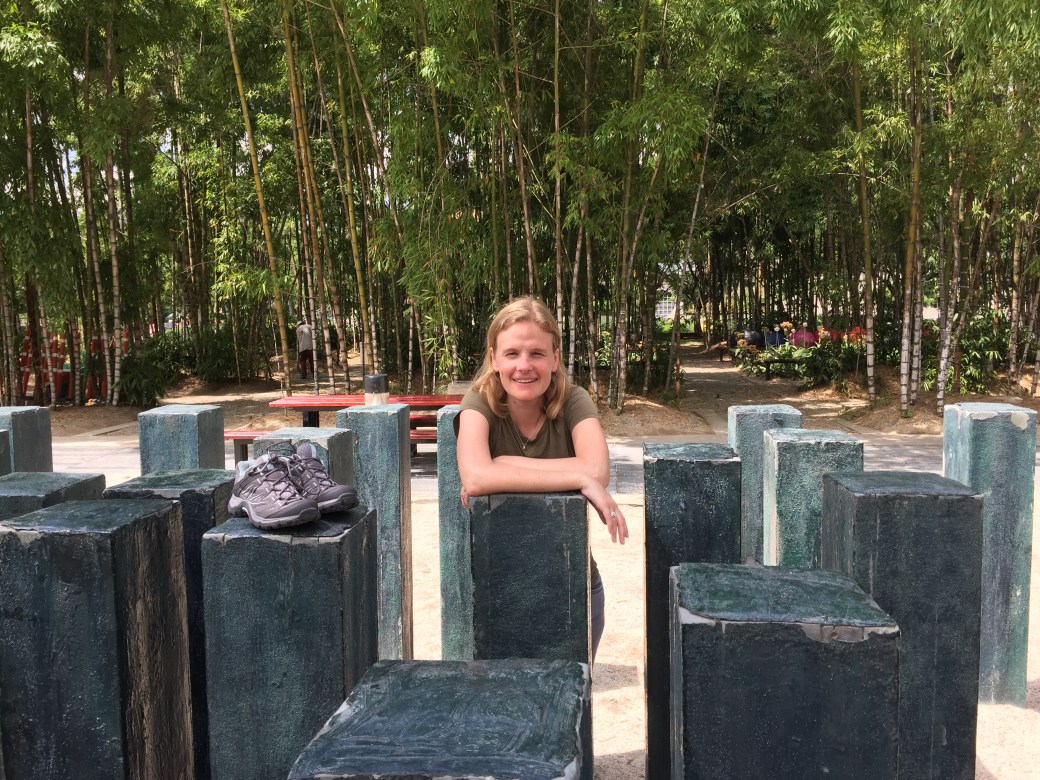
We left her in peace and headed to our first stop this time around – the barefoot park. Essentially, this is a small zen like garden, that asks you to walk barefoot through it. Sounds quite peaceful, however the stone paths are a bit more like gravel and not exactly the most comfortable to walk through.
Erwan gave up within a few minutes, found a comfy spot on a bench and waited for Jen.
Jen, certain that this was some kind of zen test, was determined to put mind over body and walk her way through it. Or she’s just stubborn.
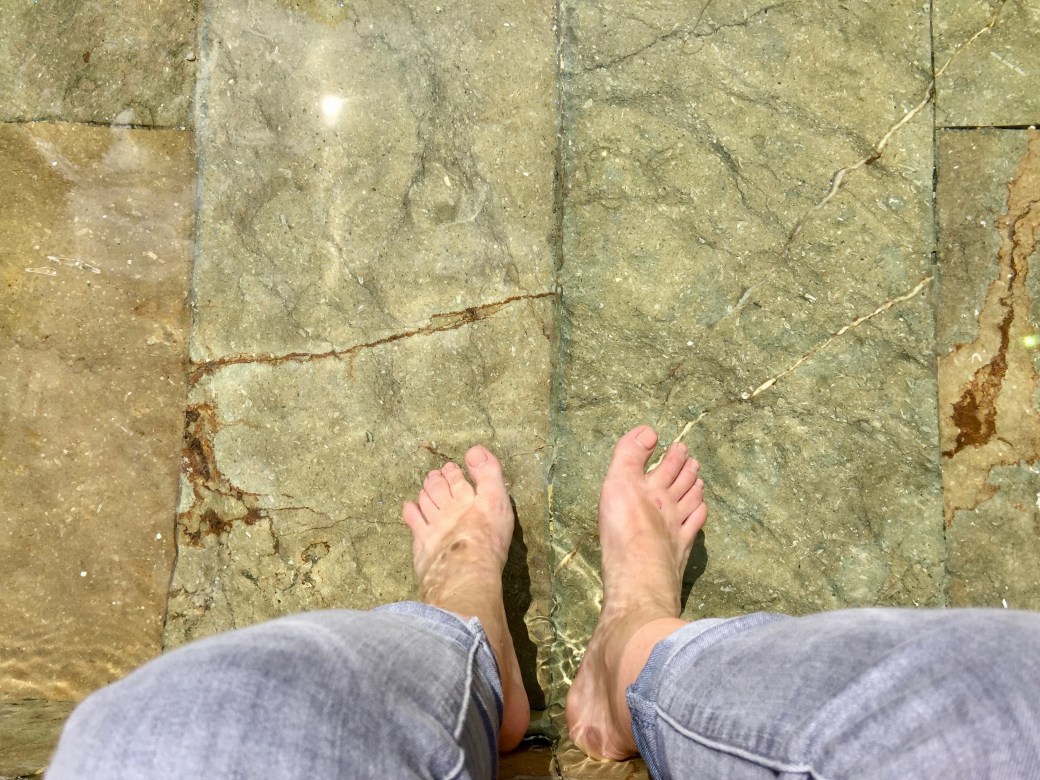
Anyway she did it and was then able to sooth her feet in the park’s water fountain. Although, after walking through it, she doesn’t feel any more enlightened. . .
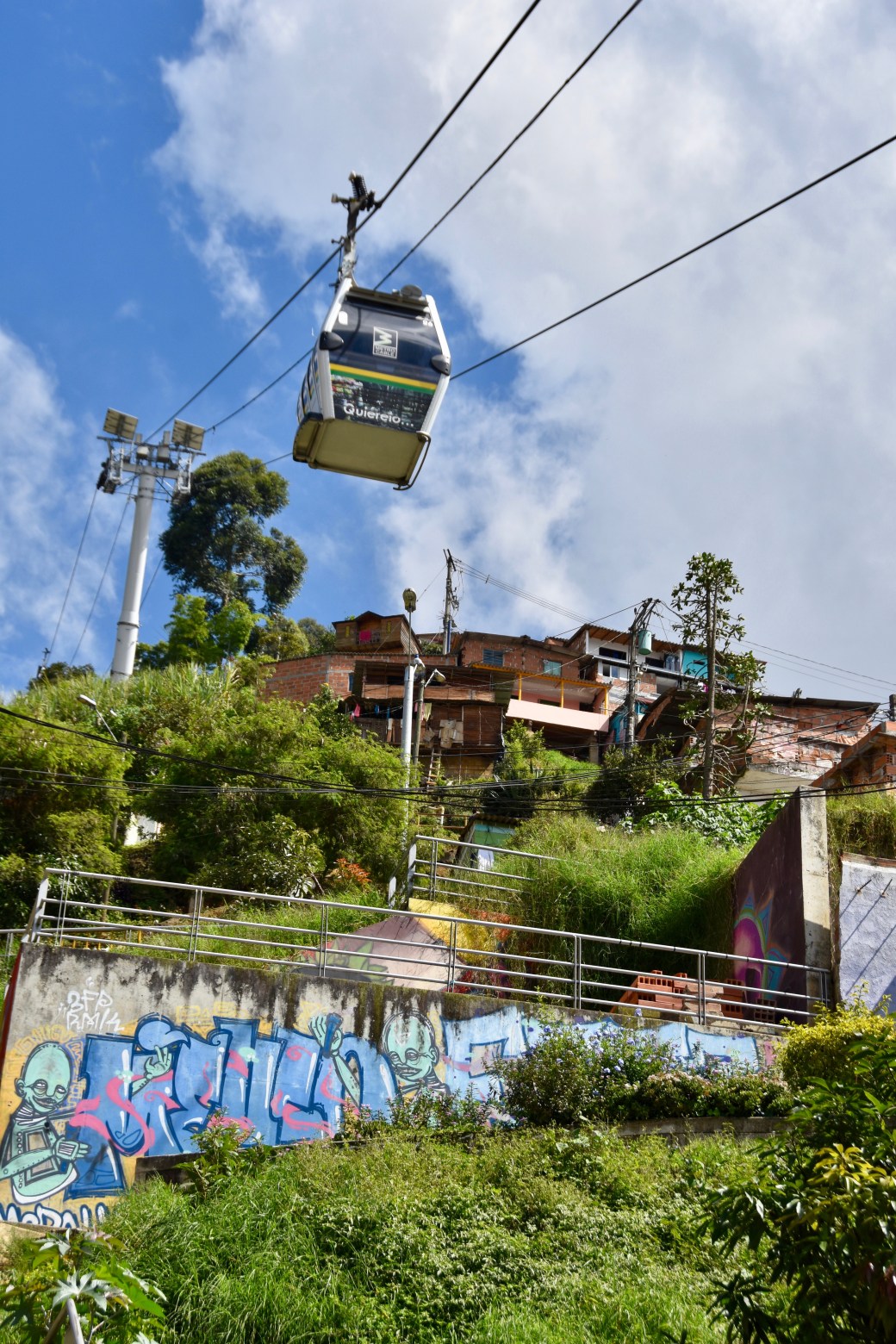
After the barefoot park, we headed to the cable car. This is something we missed that last time around, so Erwan, the infrastructure dork, was happy that we got another go at Medellin.
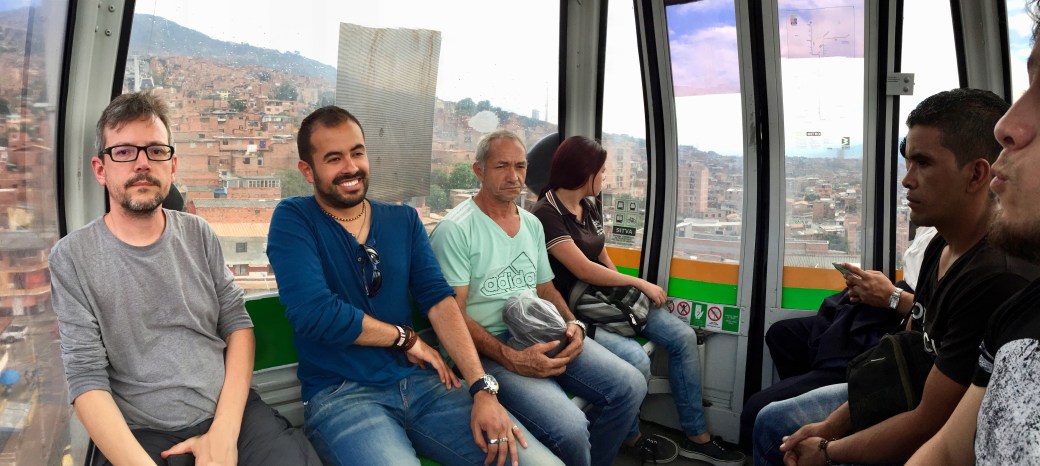
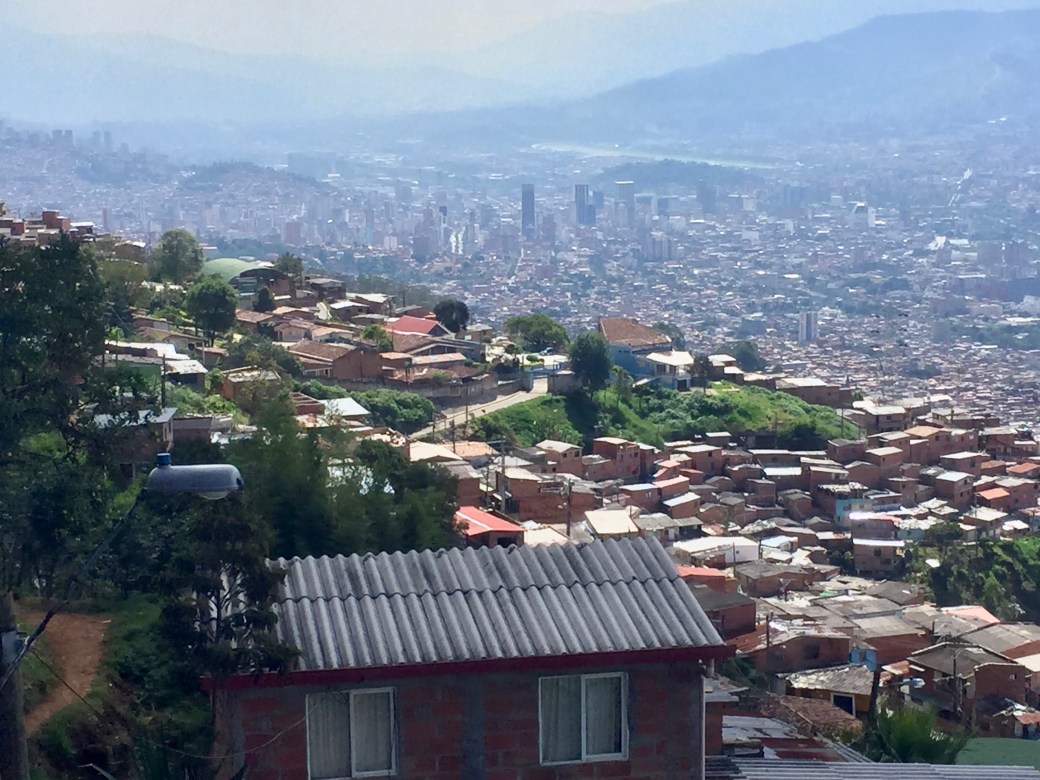
Being a city that is surrounded by large hills in which much of the city spreads, there are actually several cable cars in Medellin. Many of these are part of the public transport system and were built to better integrate these previously neglected barrios into the rest of the city. It appears to have helped – many of those we saw on the cable car were commuters/regular folk going about their business, rather than tourists looking for a photoshoot (guilty).
We took the cable car that goes to Santa Domingo and then extends up to Arvi Park, as this is the one suggested on all the tourist websites. When travelling up to Santo Domingo, the cable car is still part of the metro system and this is where you see average people using it to go about their lives. There were also three stops as you go up the hill.
Along this stretch, you get some fantastic views of the city as well as some great airial shots of the barrios below.
At Santo Domingo, you have to switch to another cable car to get up to Arvi Park. This one is more expensive, so you can tell it’s for the tourists rather than the commuter. Along this stretch, you still get some great views of the city – at first. However, it then goes up and over the mountain, where you’re surrounded by forests. It’s beautiful, but admittedly, as the urban studies dork, Jen was a bit disappointed when the views to the city stopped. In fact, for those looking for just urban vistas, we would recommend, just stopping at Santo Domingo and not going any further.
At the top of the cable car is Arvi park, an ‘ecotouristic’ park that has a little market, an exhibition on the Pre-Colombian history of the area, and some hiking trails. Most of the information was in Spanish and since we pretty much only rode the cable car for the city views, we didn’t spend much time here (probably less than 10 minutes). In particular, we were disappointed that there wasn’t a restaurant or café at the top (it was lunch time). We thus turned around and headed back into town to grab food (sadly the hot dog vendor was now on the other side of the very big city) and catch our bus to San Jeronimo – future post coming. Stay tuned!
After 11 days in both Panama City and the countryside, we’ve learnt a few tidbits from this wonderful country that we will take away, remember and maybe even learn from. Some lessons we have already written about in previous posts – namely to always remember earplugs when staying in hostel dorms, every westerner living here has some kind of back story, how to once again evacuate a natural disaster area and finally, that Jen still doesn’t really like coffee, even when given the really good, expensive stuff. Below are 10 other bits of info, that we think characterise our time here. . .
Oh, but first, a word from our sponsor. . .
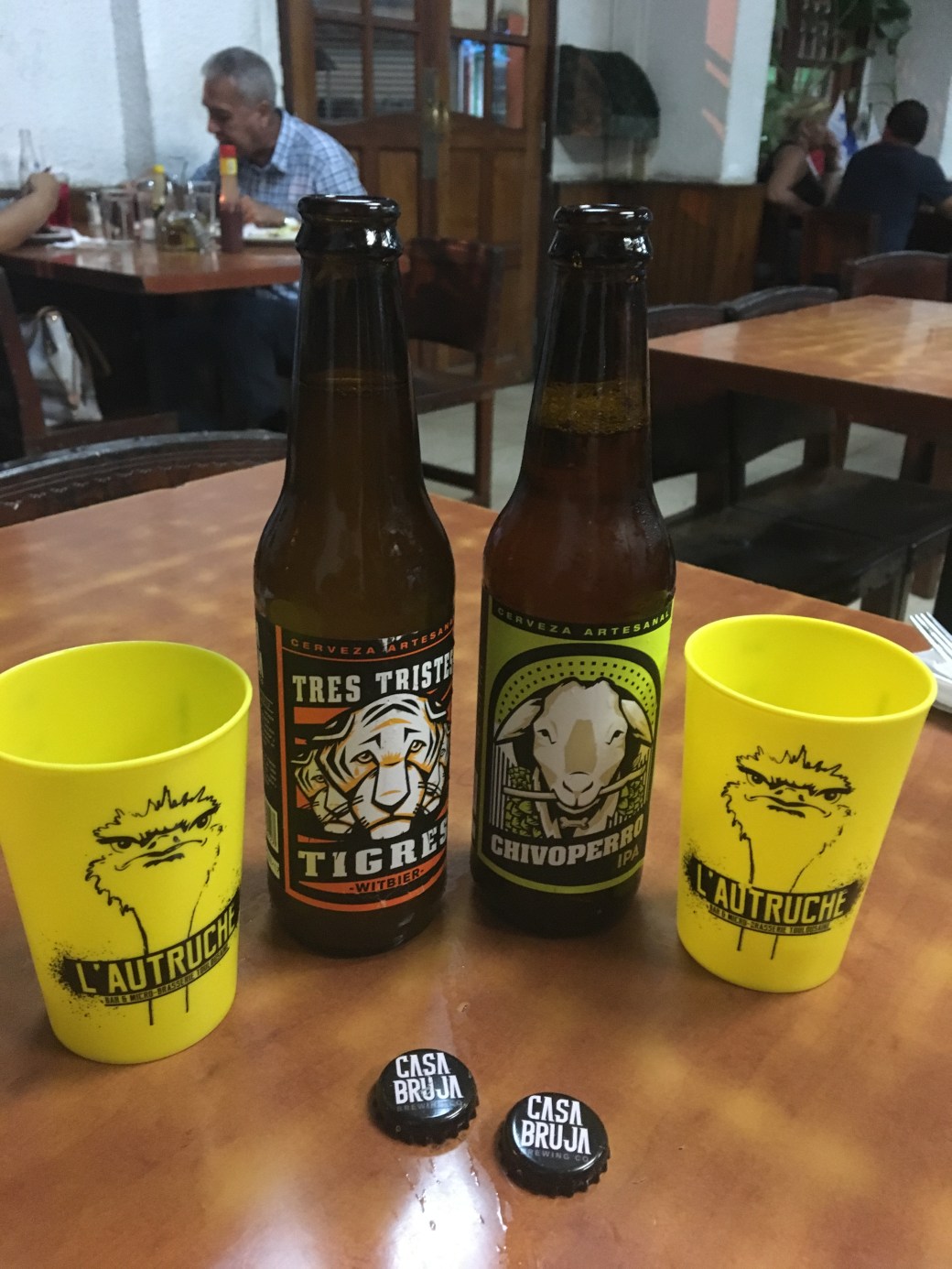
We also started a new series – “L’Autruche hosted by”, which is when our L’Autruche cups are welcomed by a local craft brewery. Here’s the first in the series – L’Autruche hosted by Casa Bruja from Costa del Este, Panama.
Sadly, there will be a delay in future instalments of the series, since Hurricane Otto, took our cups (see previous blog post).
Lesson 1 – Panama is more expensive than you think
Given that we found good accommodation fairly cheaply when planning this part of the trip, we naively thought the place would be inexpensive when compared to London or the States. We budgeted the time here in the “moderate” price category. Not really so much. It didn’t help that we saw a guidebook from 2004 that stated you could spend $20-$30 here per day. Yea, a lot has changed in that decade – thanks globalisation.
In particular, the food here is just as expensive as in London or the States, and in Panama City it was more. For example, not paying attention to the menu, for lunch one day, Erwan just ordered a burrito from a place near our hostel. It was $10! A simple burrito you get at the likes of Chipotle for $6!
To save money we thought we’d buy food at the supermarket, but even that is expensive. For instance, a bag of pretzels was over $4 and any type of candy bar or chocolate was just crazy money. The only reasonably priced items were the fresh fruit and veg – I guess that’s good for the health.
So we ended up eating at a lot of street stalls or roadside restaurants – essentially a lot of rice and beans. These places serve a single dish of the day (so no choice or menu), but it’ll be a good hearty meal and we would be able to usually feed both of us with beers for $10-$15.
Also we previously lucked out on the accommodation due to Airbnb and finding a quality hostel with dorm beds for $10-$15. In reality, it was more expensive than we thought. When we had to book other places at last minute, a dodgy hotel was £35 (where both hot water and wifi are spotty) and less appetising dorm beds were the same as our great hostel in Panama City. Your average decent hotel is $50-$70 a night, with nice ones being $120 upwards.
That being said, beer is cheap. In most places, a beer will run you $1 and most places have specials on buckets or multi buys. We would go for the buckets. . . That balances out the health of the fresh fruit and veg. . .
Lesson 2 – Pay attention to the weather, but don’t be deterred by it.
So we knew we were travelling during the end of rainy season. The optimists in us, hoped that it would be a short season and we would still get good weather. Yet the pessimists read articles on the rainy season prior to coming and the term appeared to be a bit of a misnomer. Although there certainly is more rain during these months, it is not usually be characterised by continual rain. Every day gets showers, but only for a couple hours, at most half a day.
Now, if you have been paying attention to our blog, you know that this last description was not what we experienced. We got the continual rain bit, and at times the monsoon bit. However, we are told this was an anomaly. One of our hosts in Boquete said that of his 20 years in Panama, the days that we were there were the longest stretch of time without the sun. And the weather apps confirm this – there had not been a tropical storm/hurricane so late in the season, in this part of the Caribbean since 1969.
The weather largely didn’t stop us though. Despite the rain, we mostly continued the activities that we had planned (or tried to) – that’s what raincoats are for and we’re not made of sugar. Some of the activities were actually made better because of the rain – our hikes had beautiful lush vegetation to enjoy, with plenty of flowers (although Jen often didn’t want to take out the good camera in the rain).
And when the weather definitely prevented us from doing something, we scouted out other adventures – from going honey tasting in Boquete to now getting to spend a few days around Medellin, Columbia, since we couldn’t sail to the San Blas (Jen’s still bummed on that last one though).
Plus, the rain (or to be more precise, Hurricane Otto), has now made for some good travel stories – from the mudslide that Erwan got stuck in walking to the hot springs to our emergency evacuation from Puerto Lindo (see previous posts on Boquete and San Blas respectively).
Lesson 3 – Panamanians love their flag
Jen, as an American, is used to seeing a national flag everywhere – on every public building, hanging outside people’s houses, and adorning people’s fashion.
To Erwan, as a French (who are still a very proud people), the American obsession with the flag is slightly odd. In France, besides on public buildings, you only really see the tricolour elsewhere during Bastille Day. Well, Erwan was not prepared for Panama!
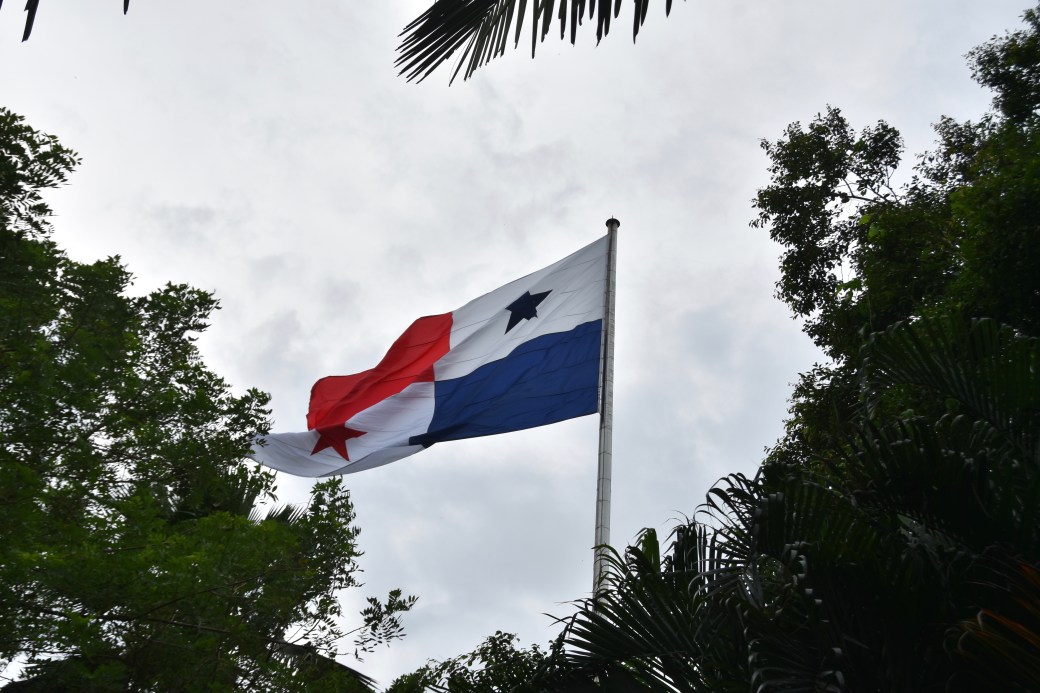
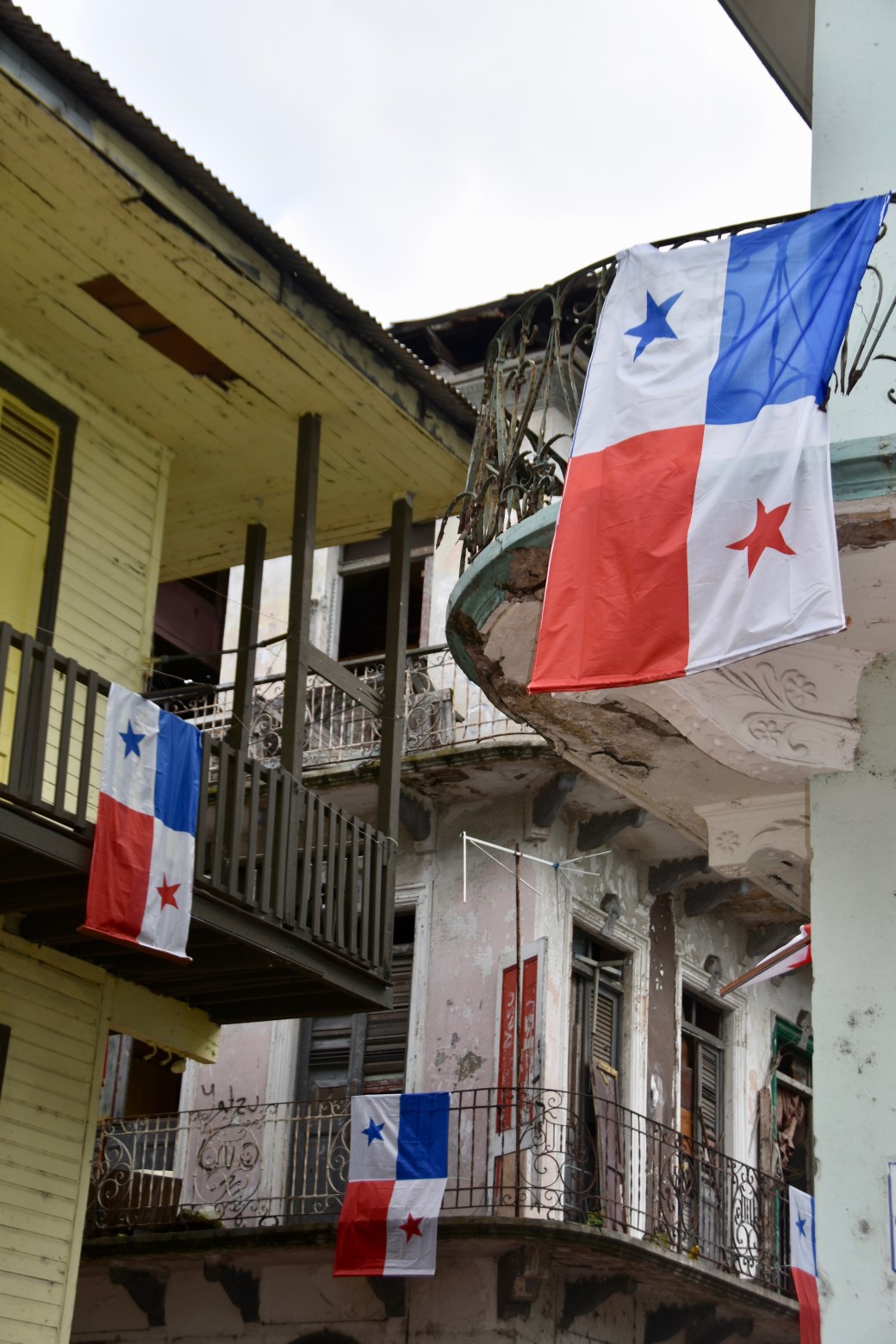
They love their flag – no, they LOVE their flag. It is everywhere – a gigantic one flies on the hill above Panama City, it hangs outside people’s houses, most restaurants have at least one up, cars have multiple ones flying from the roof, and we even passed one building that had a field of them planted outside.
The love of the flag was particularly evident when we watched the Panama vs. Mexico world cup qualifier soccer match. During the national anthem, Panamanian players didn’t just put their hands to their hearts, they also held small flags and waved them proudly.
Lesson 4 – Panamanians enjoy exercise outside
Actually maybe this is just specific to Panama City, but we found the locals to be a pretty sporty bunch. Our favourite sight in the Casco Viejo (old town) was actually watching grown men play baseball in the street.
They were copied by the children around the corner.
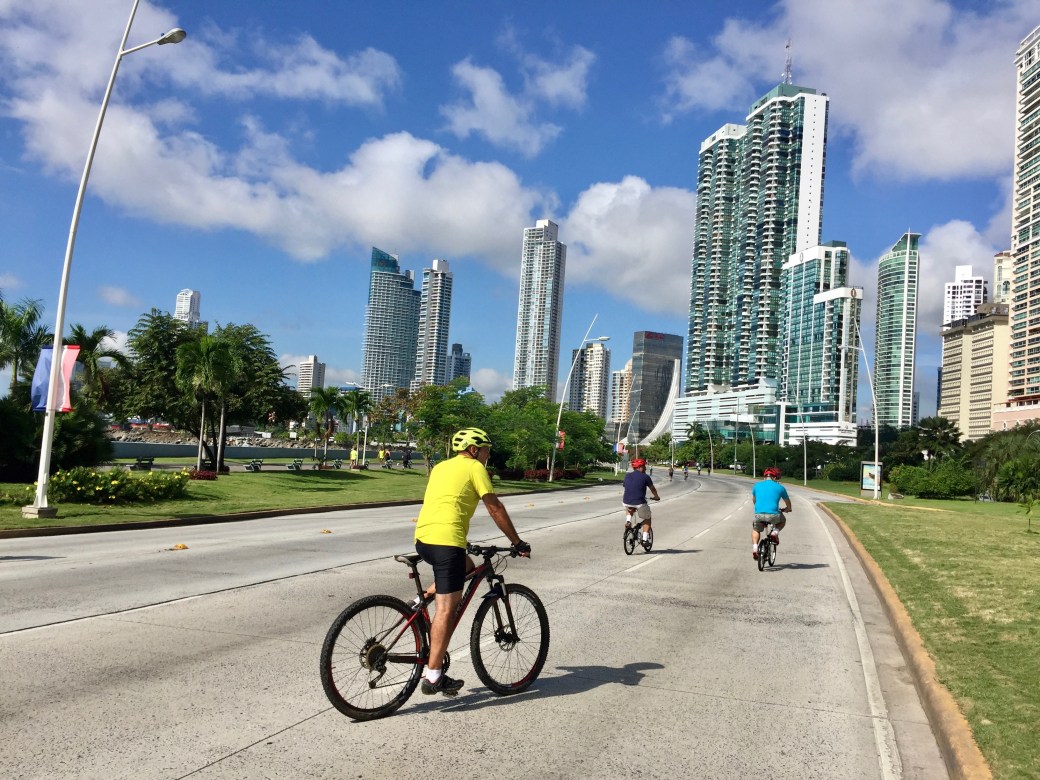
Yet the most sports activity is seen in the evenings along the waterfront promenade that stretches from the old town to the commercial district. Along this 4km stretch there were always runners, bikers, roller bladers, etc. However throughout, they also have various sports courts (basketball, 5 a side soccer, tennis, volleyball) that were full to breaking point once the sun went down, as well as pavilions that were hosting dance or CrossFit classes.
Athletic-wise, we felt very inferior along this stretch as we were just walking to dinner. . .
Lesson 5 – Despite the above, it is not pleasant for pedestrians
Oddly this joy of exercise did not extend to casual walking. And possibly why the promenade was so busy, is because you really can’t enjoy those activities elsewhere in the city.
Now, I should mention that we’re walkers. It’s our main form of exercise usually and thanks to us walking most places in London, neither of us really do much else in the way of exercise, let alone, belong to a gym. We take this walking to our travels and will usually go by foot everywhere.
However, in Panama City, except for the Casco Viejo and the promenade referred to above, it was not pleasant to be a pedestrian. The pavement (sidewalk) was always uneven and often non-existent. At junctions there would be a crazy long wait for a green man to cross and in many situations, we just had to run across multiple lanes of traffic to get to where we wanted to go.
Walking is such an anomaly here that whenever we were doing so, taxis assumed we were waiting for a lift and would stop to offer us transport. . .
Lesson 6 – Even when you do your research, the taxis also do theirs
While we walked a lot of places, we still tested out the local taxis (Panama City is yuge!). They do not run meters, so you need to know roughly how much you expect to pay and then negotiate before starting your ride. Well, Uber is here, so we would just use that or if not, it would give us a good estimate of the fare to bargain towards. Yet when the surge started on Uber, we would go back to taxis and try to haggle, thinking it would be cheaper. The answer is no – the taxi drivers are on it – they know when there’s a surge, so they align themselves with Uber to the dollar!
Oh and another car related tidbit! In Panama, they have to change their registration plates every year. We think some politician must be in the business of licence plates…
Lesson 7 – Linked to the above, they love their (big) cars
As one can deduce from the above two lessons, they like their cars for getting around. And not just any cars, they like their big cars (or in Panama City, also their luxury cars). Like the flag obsession, it’s another trait that is shared with Americans.
We rented a car in Boquete and just went for the cheapest option – in Europe we usually still get an upgrade thanks to Erwan’s gold membership. Well no upgrade this time, so we had a “toy car” that was routinely mocked by the locals and looked tiny in parking lots next to everything else. There were many unpaved roads in and around Boquete, so something slightly bigger maybe would have helped, but it still did the job. . .
Lesson 8 – visiting the Canal is easy, but for the best experience do a bit of research
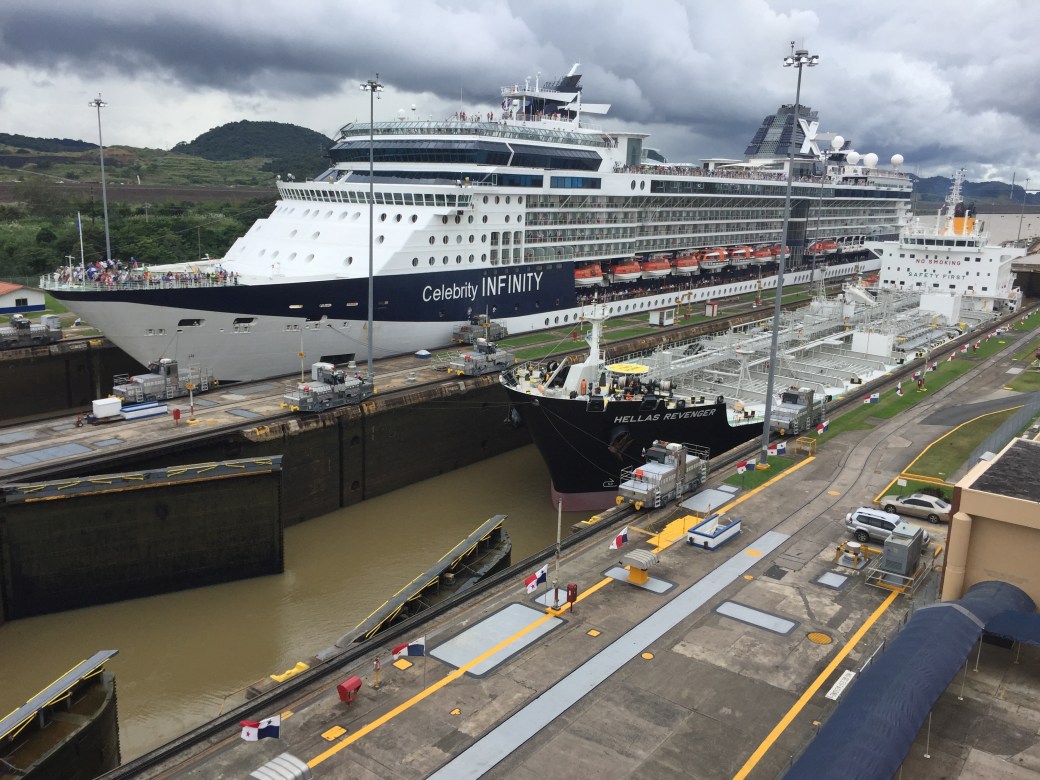
Visiting the Panama Canal is really easy – you just need to rock up to the Miraflores locks and bam, giant boats are only feet away. Any taxi can take you there and there’s even a public bus.
The locks let about 10-15 boats through a day and the journey takes about 8-10 hours to go through the canal and its 3 locks. In theory that should leave plenty of time to plan your visit. Well no, depending on tide, you might not actually see any boats.
If you want to see them, check the boat times beforehand (most hostels or hotels will know), otherwise you might be waiting a long time. We knew this trick and so only showed up to the locks in the afternoon, since the first boat would be coming through that day at 2pm. There were other tourists there that were waiting for most of the morning.
We however we were not as wise when trying to ride the canal train to Colon (it runs alongside the canal). We asked locals about the train and were assured that it ran every day at 7:15 in the morning. Well, “everyday” does not include Domingo, or Sunday. Guess which day we wake up early to go take the train ride?
Lesson 9 – Erwan could have been Panamanian royalty
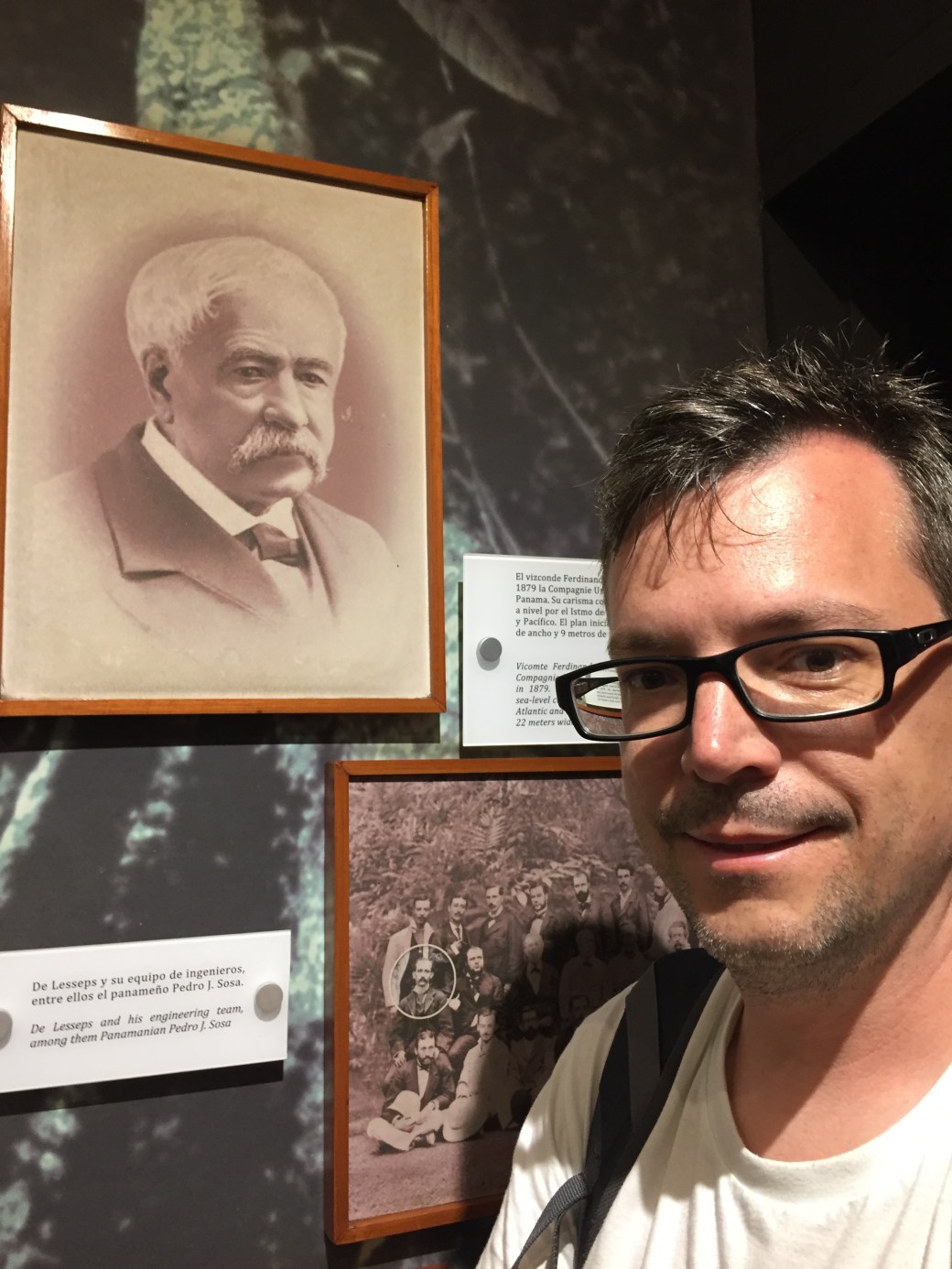
Everyone knows the Panama Canal was built by Americans. Well it was actually begun originally by the French. And in particular, by Ferdinand de Lesseps, who in the late 19th century charmed his way into convincing the locals that a canal would be a good idea. He got the commission and began demolishing all the hard “mountains” that were in the way.
Well, Lesseps was the great uncle of Erwan’s maternal grandmother (at least this is what he was told when driving down Boulevard Ferdinand de Lesseps in Versailles, as a child).
Sadly, Lessep went bust, had to declare bankruptcy, abandoned the project and then sold it to the Americans at a fraction of the cost. . .
Lesson 10 – Coffee economics
Everyone knows of fair trade coffee and most brand name shops proclaim their commitment to such. Well a bit of math behind that:
The average pound of coffee is bought from source for only $2 per pound (Starbucks routinely pays $1.90). When sold at your local coffee shop by the cup, this same pound of coffee will bring in about $100. Yes, there’s various overheads in between, but that’s a high mark up!
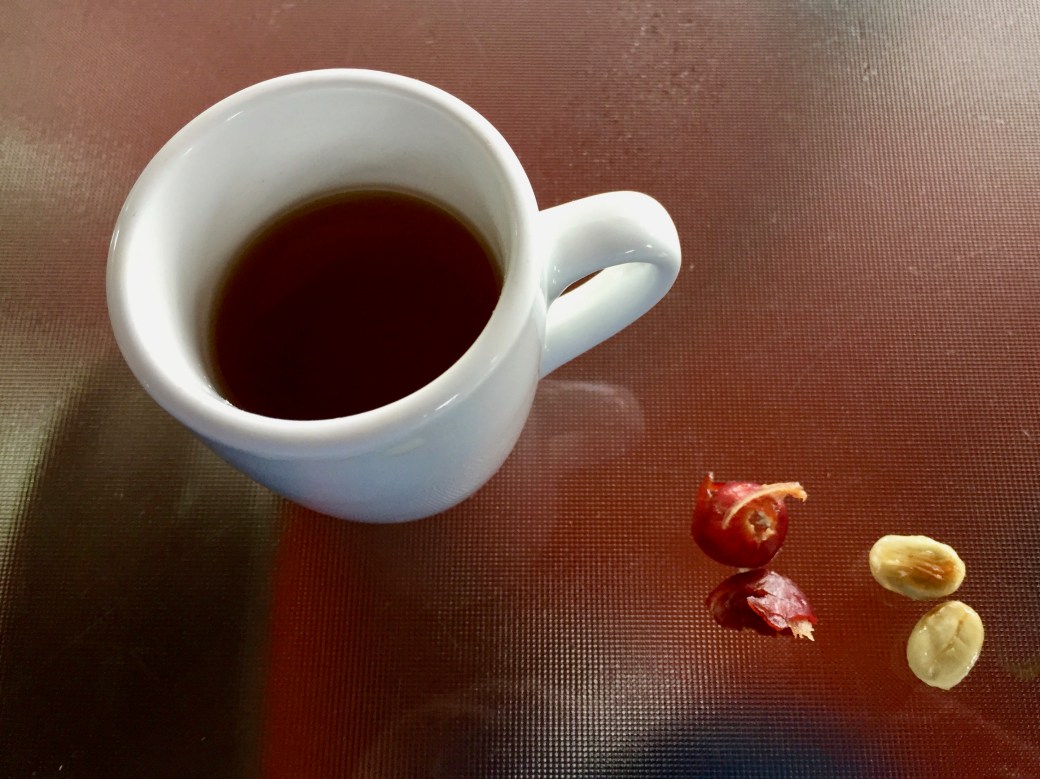
At $2 per pound, the average coffee grower still lives in poor conditions (usually without electricity). The coffee plantation that we visited sells their coffee for $10 per pound, which allows their workers to live decent lives – and even then, the owner said that he’s able to do better than most farms because of the coffee tours he offers. . .
So that’s what we learnt in Panama – or at least what we have reflecting on thus far. That’s the thing about travel, it keeps giving you little tidbits to go back to, enjoy, relate to and share.
Despite all the weather chaos, we still thoroughly enjoyed our time in Panama. We met some great people – locals and fellow travellers and had some amazing experiences that we will remember for years to come. And we will be back! At the very least, the San Blas are still on Jen’s bucket list. . .
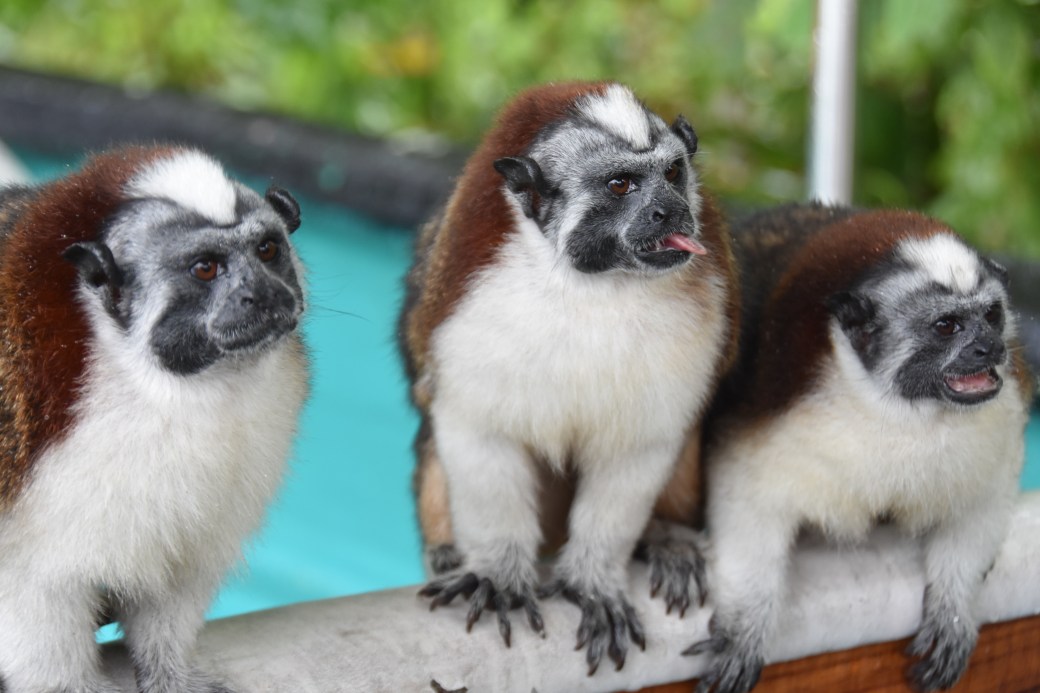
Oh and not mentioned above, in Panama City check out the Biomuseum (designed by Gehry) and take a tour to see the monkeys around the canal. On that, we leave you with one of Jen’s favourite photos:
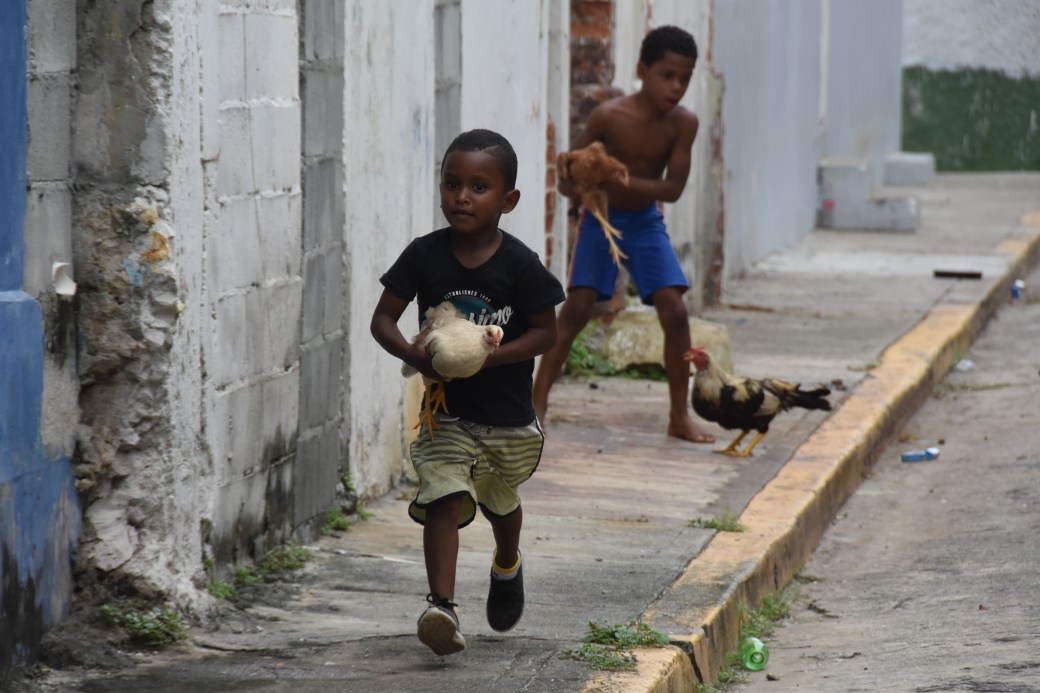
And speaking of cheeky monkeys, I think we also witnessed some chicken theft in the old town. . .
One of the places that Jen was most excited about for this journey was visiting the San Blas. We had not only read great things about the archipelago, but friends have given great recommendations, including one, who spent two years traveling the world describing it as “the best place he ever visited”.
So when planning the first stages of our trip, the San Blas were definitely. On. The. List. Furthermore, we wouldn’t just be doing a two day trip like many that you find from Panama City. No – we booked a 5 day sailing adventure which would take us through the San Blas and then deposit us in Cartagena, Columbia. So it doubled as inter-country transport – score!
We booked the trip months in advance – paying the deposit was Jen’s first experience with a Western Union. And after a few days in Boquete, now was the time!
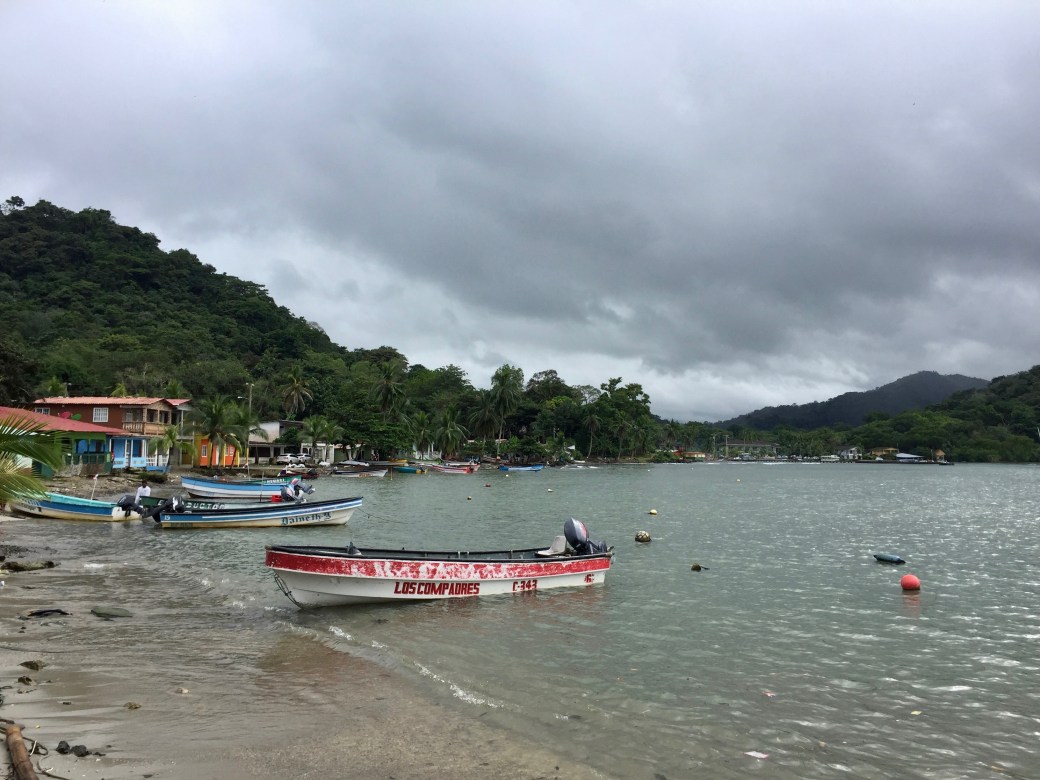
Our sail boat would leave from Puerto Lindo, a small sea village on the east coast – a cute little place, which is probably even better looking in the sunshine. But we’re getting ahead of ourselves. . .
Puerto Lindo
In order to get to Puerto Lindo, you need to travel to Colon first and then take a local bus that goes to all the little towns along the Caribbean coast. For Colon, we at first wanted to take the canal train, which runs alongside the Panama Canal and had a glass roof to see all the flora and fauna of the surrounding forest. As an infrastructure dork, Erwan was particularly excited about this. Thing is, the train only runs at 7:15 in the morning. We get up super early to get there in time to buy tickets, etc, only to be told once we arrive “no, Domingo”. Yeah, it was Sunday and the train line was closed – poor research and planning on our part.
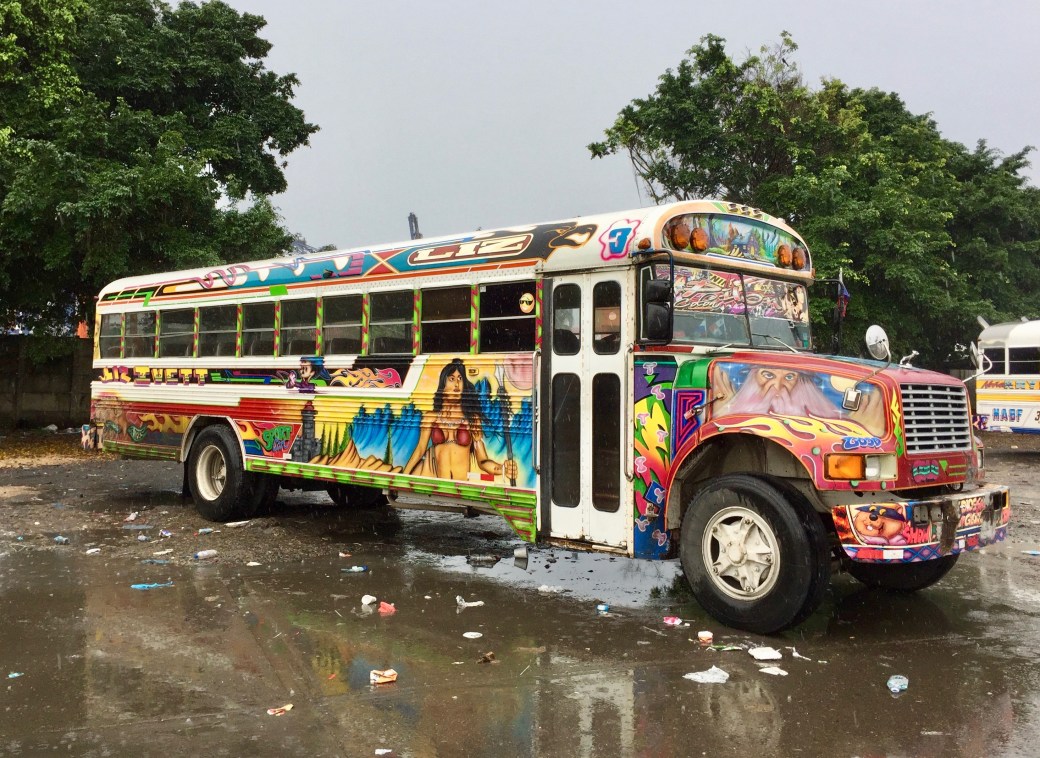
We still obviously needed to get to Colon, so plan B – we took the public bus. If ever in Panama, definitely take the opportunity to ride the local buses, which are pimped out former US school buses. Paint jobs, disco lights, stereo systems – the works.
And, they still keep the former school rules signs. Jen wondered whether she could possibly be on the same bus that took her to middle school. . .
After getting to Colon, which is a city that we would not recommend (all the locals told us it was “peligroso” and from our 30 minutes spent there, it felt as much), we took a bus to Portobello. We could have taken a direct bus to Puerto Lindo, which is a bit further than Portobello, but as we didn’t need to be at the boat until the evening, we had plenty of time to kill and heard good things about Portobello, a former Spanish colonial town that also has a good beach.
Oh, but I should mention that it’s been raining this whole morning – albeit mildly. In fact, due to our previous time in Boquete, we hadn’t seen the sun in quite a few days. . .
Anyway, another pimped out bus ride later, which included lots of people dressed in their Sunday best getting dropped off at various churches along the main country road, we arrive in Portobello. There, it decides to start pouring. We seek shelter in a hostel bar, which is not actually opened and when we asked the owner when it would serve drinks/food, he responded “it’s Sunday, maybe in a little while, I don’t know”. After using his wifi for a bit, we explore the city quickly, particularly wanting to see the Cristo Negro in the church, which is famous.
No real luck, getting to see the statue – mass is going on. We’ll come back later. Following our jaunt, we stop in a local spot for lunch. After lunch, mass is still going on. We go to the bus stop to now wait for the local bus for Puerto Lindo.
Waiting for the bus
We wait almost two hours (nobody could tell us when the bus would come, as it’s Sunday). As we left, mass was still going on. . .
The apparently day long mass
So we arrive in Puerto Lindo! One step closer to the San Blas! And it’s still raining. . .
Arriving in Puerto Lindo
No worries, we find the bar where we’re supposed to meet our captain and settle in for the next few hours, except for a brief excursion to another bar, which is the only place in town that has a wifi connection. Oh and there’s no ATM in this town or even in Portobello. Given the lack of services to begin with and that which is to come, Erwan now refers to Puerto Lindo as the end of the world town.
While at the bar, we meet a German couple, who is on the same sailing trip with us. As it’s still pouring out, they also settle in and we share a few drinks with them. There are 12 people in total, but everybody else doesn’t join until just before 7pm, which is when we meet Victor, our captain for the trip.
Victor tells us that the boat won’t set sail in the morning due to the weather, so we won’t be boarding the ship that night. Instead, we need to meet him in the morning for an update, however he is confident that we should be able to sail the following day.
With the German couple, another Canadian couple and two young backpacker dudes from the states, we head to a nearby hostel, where we’re all put up in a “building” that used to be a former hen house. It’s run by a very lovely Austrian women, however the facilities were basic. There was no hot water and the building hadn’t seen a storm like that in a while, so the roof leaked. It leaked on Erwan. In the middle of the night. While in bed. Jen was on the bottom bunk this time. Erwan’s “roughing it” score has gone up massively.
Slightly rough night, but it doesn’t matter, we’re heading to the San Blas!
We meet Victor at 10am and he tells us that despite the rain, we should be able to board tonight, in order to set sail at first light the following day. He warns us that the first two days on the San Blas will probably be poor weather, but we will still go ahead. With the news of poor weather, two couples decide to bow out of the trip – including the lovely German couple we met the day before. They head back to Panama City and coordinate alternative means to get to Columbia.
The remaining eight of us settle into the same bar to hang out for the entire day. The. Entire. Day. At a bar. There’s poor weather outside and no wifi, so it’s just storm watching and getting to know each other. During that time, I learned tips on painting, tidbits on Austrian politics, nutrition tips from a certified nutritionist (who confirms that when there’s nothing else to eat, chips and beer is a perfectly fine meal), and a new drinking game.
At 7pm, we were all ready to go and Victor came to tell us everything was fine (despite the continued rain and increased winds). Due to the higher waves, we just needed to walk to the dock on the other side of town to take the dingy to the sailboat (about a 5-10 minute walk). One of the other passengers refused to walk that far with her bags, so Victor goes to sort out some kind of transport (despite the rest of us saying we could help with the bags). When Victor comes back 30 minutes later, suddenly the trip is off again by another day, due to the increased wind and thus, the size of the waves.
So, we need to find further accommodation. As we are now bonded with the other passengers, we split the two apartments above the bar. We share one with the two American backpacker dudes. Although the facilities are a bit better than the night before, the shower is still cold, in fact it was freezing – coldest shower Jen has ever taken. But it’s still all ok, we’re going to San Blas! After our day of drinking/doing nothing and knowing that we are to meet the Captain for an update at 7am, we have an early night.
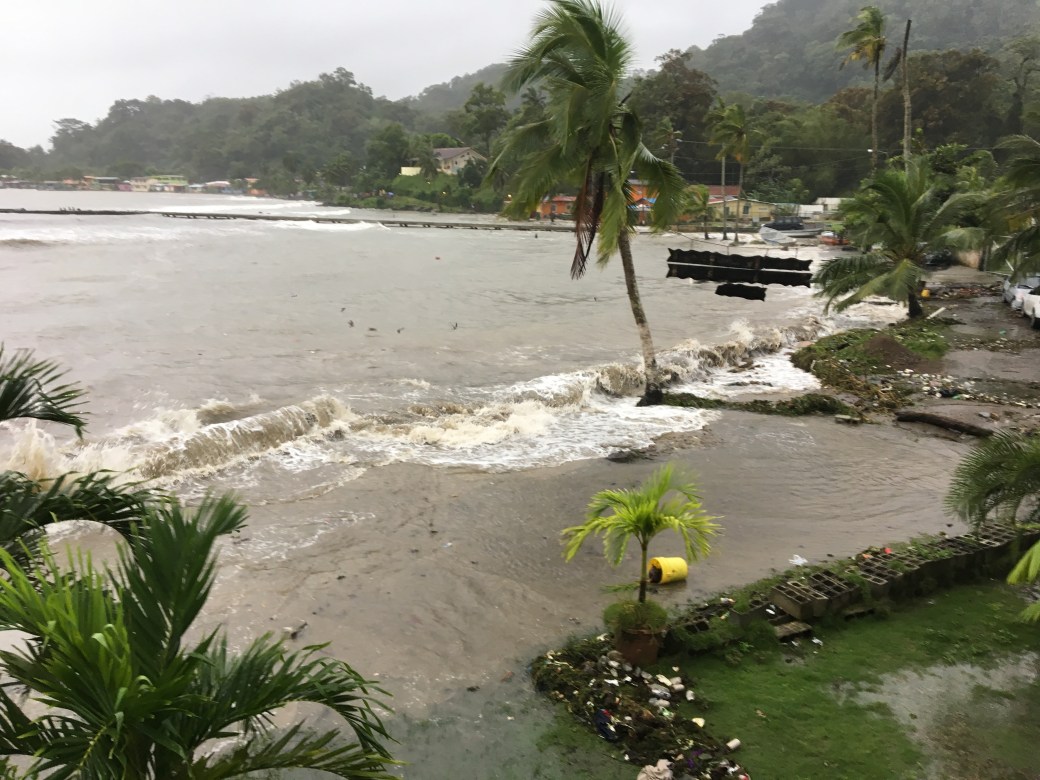
The storm gets worse in the night. In fact, it is no longer just a storm, but has turned into Hurricane Otto. Otto’s really mean and he batters the tiny town of Puerto Lindo. The place floods, power and water is cut off, boats in the harbour are grounded/damaged/sunk and our little bar/apartment building is now on an island. We wake up to gale force winds and local dogs seeking refuge on our upper storey terrace. The whole area is declared a national disaster area.
Um, I don’t think we’re going sailing anymore, Dorothy.
And to confirm this, Victor, our captain doesn’t show up at 7am, as he instructed. We aren’t sure if he’s on the boat or elsewhere. We wait and enjoy a breakfast of beer (again endorsed by the resident nutritionist). Hans, the bar owner, who is a wizened sailor, tells us, to just be patient. He spends the morning watching the seas with his binoculars and mumbling.
Breakfast of beer
We all hang out on the upper storey terrace (the bar is flooded and being battered by waves). 8am, no Victor. 9am, still no Victor. We ask Hans for the local bus schedule – there should be one at 9:45 and another at 12:45. We have no idea if they will be running as there are flooded roads and downed trees, but we start to make plans to evacuate. The eight passengers are evenly split – 4 (including us) are now looking to leave and thinking the trip is a no go and 4 are going to wait it out until it is absolutely certain that we cannot go sailing.
We start to pack up to go wait for the possible 9:45 bus. However, in doing so, we realise that our L’Autruche cups (our trip sponsor – see other main page) are missing! We take apart all our luggage looking for them, but in vain. While doing this, the other couple leaves to go wait for the bus. Knowing this might be an only chance to leave this “end of world” town with the storm is getting worse, we quickly repack to rush and join them. It should be said that Jen is super annoyed at Erwan for not knowing where the cups are (they were kept in his small backpack).
As we are walking through water to the bus stop, trying to catch up to the other couple, a car pulls up, which includes the lovely Austrian hostel owner from the previous night. She is being dropped off in the centre of town by one of her guests, who is now trying to leave by driving back to Panama City. The guest doesn’t want to drive alone and offers us a ride, but only has room for us two. We take this opportunity, although we know it might be in vain since earlier we heard that local roads were flooded or blocked by downed trees.
The driver is Lu, a Chinese women doing her graduate studies in Miami, and she could possibly vie for a position as a rally driver – she took the windy, rural road really fast. Fortunately, there were work crews out in all the treacherous spots (downed trees, landslides, standing water) and we were able to pass (although Lu had to reduce her speed a bit to do so).
Within 2 hours (the trip is normally supposed to take about 3 hours), we were back in Panama City and as Erwan says “back to civilisation”. We checked into the same hostel as before (see earlier post about snoring dude), took hot showers and naps, ate a solid lunch and booked last minute flights to get to Columbia by other means.
So no San Blas Islands for us. Jen is really, really bummed about this. Also no more L’Autruche cups. Jen is again really bummed. This is so far the worst of all the travel days and hopefully will remain as such for the rest of the year.
However, it should be said that the above are completely first world problems. While the rain is certainly ruining some of our travel plans, as of writing this post, 8 people have died in Panama due to Hurricane Otto. Hundreds if not thousands more have lost homes or livelihoods due to the storm. This is the second natural disaster that we have experienced on this trip and we are truly blessed that we have the means and ability to evacuate without too much personal damage. Many of the people we have met along the way do not have this luxury.
Postscript facts: Hurricane Otto is the latest to form during the year in the Caribbean since 1969. It is also the first ever Hurricane to hit Costa Rica since records began in 1851. The rains in Boquete that we experienced were the longest period of rain that the town has experienced in 20 years and the storm/flooding in Dominican Republic was the worse in over a decade. The intensity and frequency of these storms within the Carribbean have increased immensely over the past few decades. As one of our Airbnb hosts in Boquete put it, “we have all these extreme weather events, but to the Americans, climate change still isn’t real”.
Travel lets you meet new people from all walks of life. Boquete was certainly one of those experiences for us. It’s a small town, with a swiss village feel to it, perched at the foot of the Volcan Baru. The weather is constant all year round (except for the 3 days we were there), between 25 and 27 degrees celsius – perfect for coffee growing. . .
This is the place where loads of Americans and other foreigners have elected to live – often definitely leaving something else. Most of them are quite open about why they left and we met a few interesting characters. They were either fleeing the IRS and/or Feds, setting up an autonomous community that relies on the gold standard (convinced that the US/world economy will go bust soon), or taking a well earned retirement, but then getting hooked on running a coffee plantation. . .
We’ll remain vague on the specifics of each that we met, but they were all happy to share their experience, and these characters made our trip to Boquete interesting to say the least. . .
Oh, and we might start the “Gemma” list, which is a list of the people who have annoyed you on your trip. We are starting to have a few of them as well. . .
So from Panama City we planned about 3 days in Boquete. Boquete is known for its beautiful landscapes and its fun adventure activities –hiking, climbing, rafting, etc. In three days we hoped to do three key activities:
Hike Volcan Baru – a volcano, which from the top you can see both the Atlantic and the Pacific
Visit the local hot springs in Caldera (a nearby town to Boquete)
Tour a coffee plantation and try the amazing local varieties – particularly Gesha coffee, which has a bit of a cult following and for which, some crazy people pay $350 a pound elsewhere (we would not be spending this much)
Three days, three activities, sounds doable right? Ha! Cue the storms! Firstly, our time in Boquete was delayed a full day due to weather, so we spent an “exciting” day at Panama City airport (see previous post). Fortunately, we flew with CopaAirlines who provided excellent customer service – including providing umbrellas when we did finally land. . .
Secondly, the weather was poor our entire time in Boquete (pouring again), so hiking Volcan Baru was going to be:
Slightly dangerous
A bit pointless if done in the clouds, since we largely wanted the view to both oceans
Behind that wall of cloud is meant to be Volcan Baru. . .
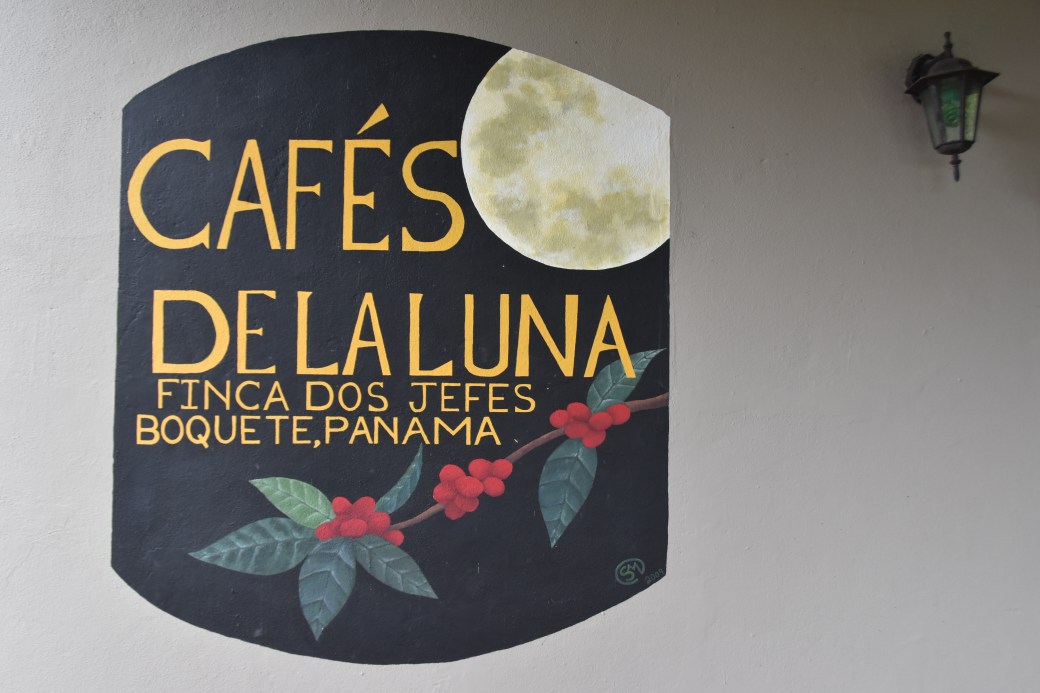
So a plus b equals no fun. A bit disappointed in this result (the Volcano was the main reason that we wanted to come to Boquete), on our first day in town, we head to do the activity that is the least weather impacted – the coffee tour. It did not disappoint! If you are ever in Boquete, you should do a coffee tour – even if you don’t like coffee (Jen doesn’t really) and more specifically you should do it at Finca Dos Jefes – http://boquetecoffeetour.com/coffee-tours/
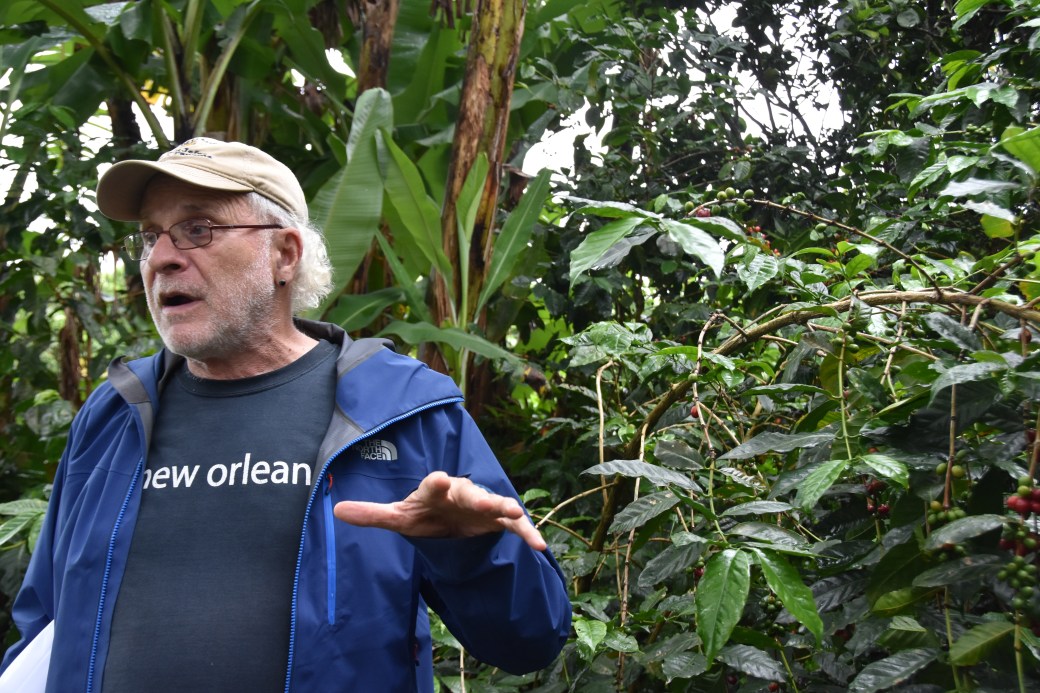
Finca Dos Jefes is run by Rich, a really friendly retired American (he used to run the meals on wheels program in San Francisco). Rich bought the abandoned farm as a nice location to retire. However, following some retiree boredom, he started to grow his own coffee and he fell in love with it – the process, the history – everything! Throughout the afternoon, we could tell that coffee was his passion and it was contagious – Jen began to regret not really drinking coffee.
Rich doing his thing. . .
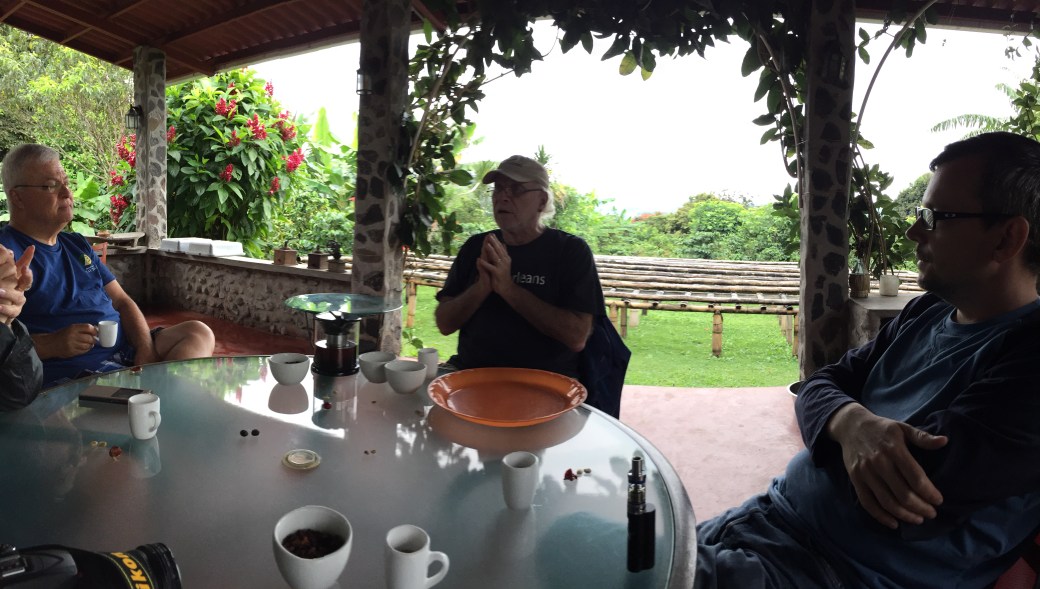
The tour is really relaxed and conversational – Rich starts by asking everyone their “coffee experience” – what they like to drink, how and when they drink, if they’ve been on tours before, etc. Erwan, as a coffee addict blended right in with the other couple on the tour and Jen had to shamefully admit that she rarely drinks coffee (only in situations where it would be rude to not take a cup – like a coffee plantation tour). Despite this sacrilege, they still let her continue on the tour.
The tour includes a brief history of coffee production, a description of how it’s made, a short walking tour around the farm, and a tasting of both their medium and dark roast. Then you get to roast and take home your own blend! Rich even kindly ground the beans for us (despite his preference of keeping them whole until time of use), so that we would more likely be able to enjoy our coffee during our travels. . .
Yet, what we particularly enjoyed about the tour was Rich’s wealth of knowledge on the social, environmental and economic impacts of the coffee industry. It wasn’t presented as a lecture, but was having a nice conversation where we could pick the brain of a man and his passion – seriously, it was really fascinating. He described all the issues facing coffee growing and in his small way he was really trying to improve the industry – to include sponsoring a school for the indigenous people who serve as temporary labour during the harvest.
At the end of the tour, we stayed and had a beer with Rich and the other couple and just enjoyed the company and view further. Despite the weather, things in Boquete were looking up!
The day after the coffee plantation tour, we went to a local café to do a further coffee tasting, where we tried the Gesha variety (Finca Dos Jefes does not grow Gesha as they are not at a high enough elevation). Jen could definitely tell the better quality, however it still didn’t turn her into a coffee drinker. She does definitely appreciate it more now though. . .
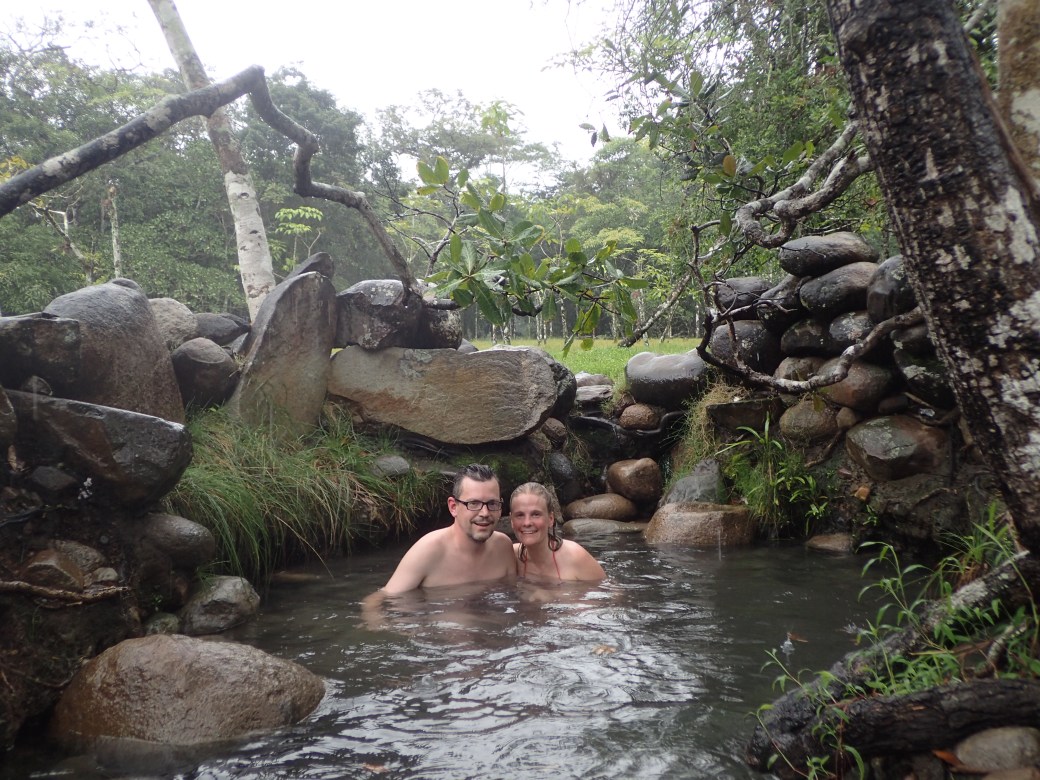
Oh and we also still made it to the hot springs! Despite walking through a mud slide, they also did not disappoint.
OLYMPUS DIGITAL CAMERA
OLYMPUS DIGITAL CAMERA
OLYMPUS DIGITAL CAMERA
Similar to the Lagoon Dudu in Dominican Republic, Jen found another happy place despite the rain. They were very relaxing, although super hot! Each of the 3 springs has a slightly different temperature. In the hottest one, neither of us could spend longer than a minute with our full body in. . .
OLYMPUS DIGITAL CAMERA
OLYMPUS DIGITAL CAMERA
OLYMPUS DIGITAL CAMERA
OLYMPUS DIGITAL CAMERA
OLYMPUS DIGITAL CAMERA
OLYMPUS DIGITAL CAMERA
OLYMPUS DIGITAL CAMERA
Finally, as a bit of an extra, besides the coffee tasting, we were able to get some beer tasting in at the local Boquete Brewing Company (good pale ale).
Who knew there could be 40 different types of honey?! All the varieties are based on the type of food the different bees are feeding on. Some were absolutely amazing, particularly the cacao and chili honey infusion – too bad we don’t have space/weight capacity to bring any along with us. . .
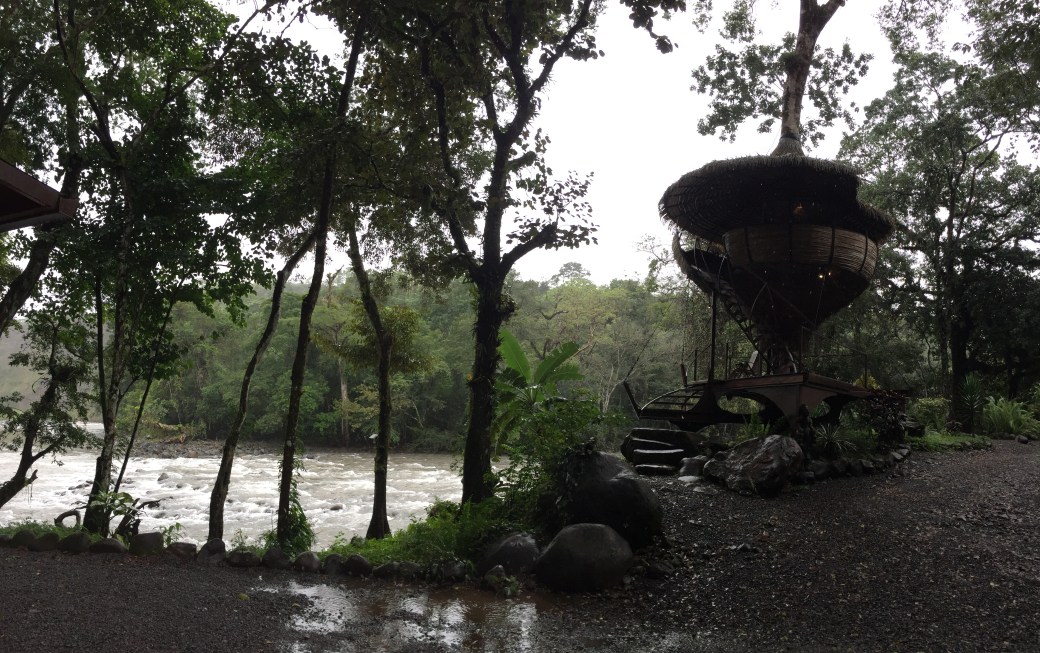
Oh and finally, we stayed in a treehouse one night! Yes, an actual tree house. It was right by the river and it a storm was going on – that’s completely safe, right?
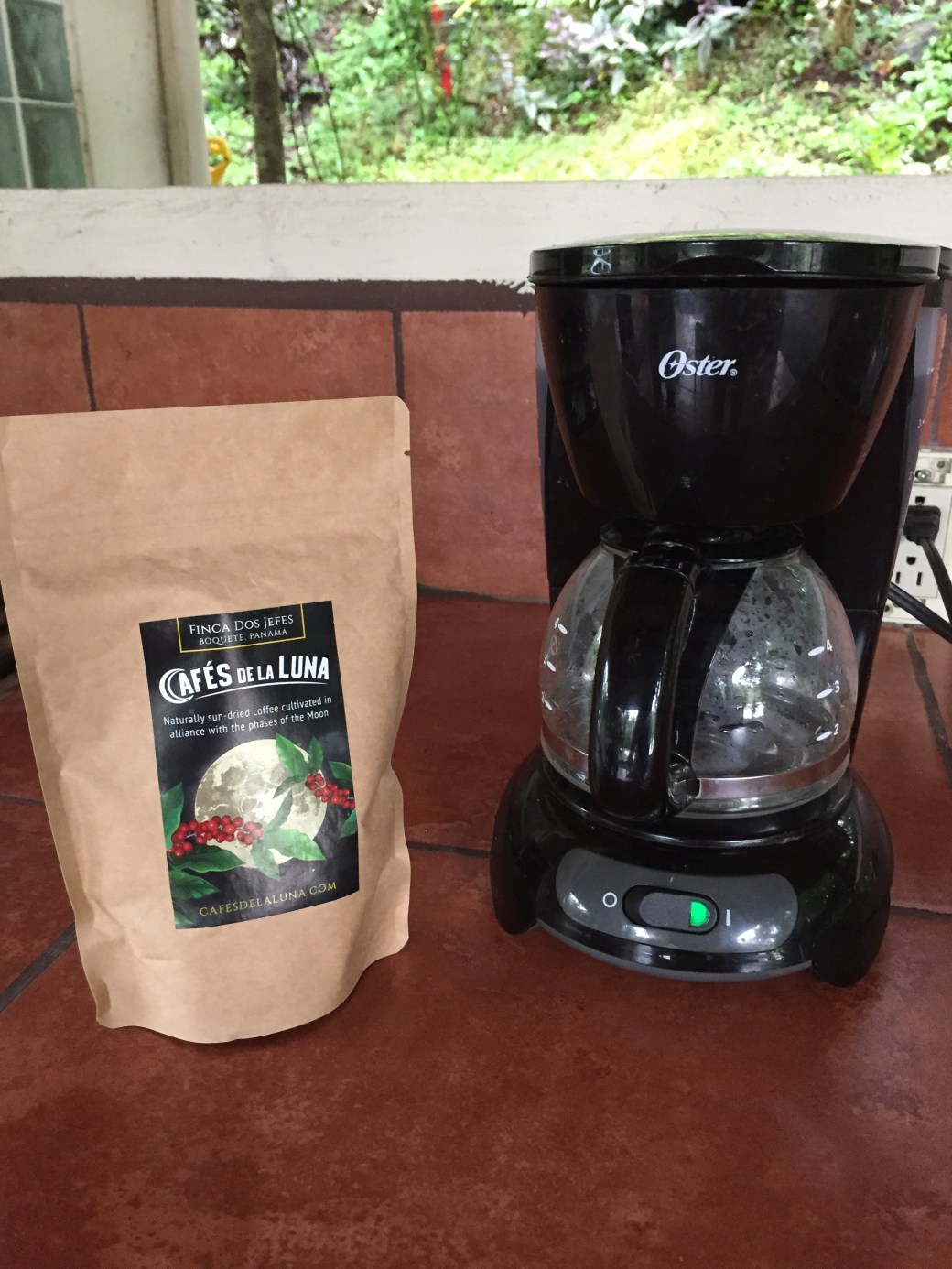
At least it had a coffee machine for us to brew our own creation (even Jen had some). . .
When the previous post was posted, we were actually waiting for a delayed flight from Panama City to David, in order to visit Boquete. The flight was scheduled for 7:42, so we had to wake up before 6 to get to the airport in time. This is following the previous morning where we woke up at 6 in order to get to Monkey Island in time to see the monkeys. We digress. . .
Due to a storm in David (seriously the monsoons are following us), our flight was delayed, then delayed again, then delayed again. And again. After 4 times back and forth through security (the domestic lounge didn’t have wifi or indeed many seats) and a day of getting frustrated with the spotty airport wifi, our flight was finally cancelled.
Following a somewhat tortuous procedure, we got rebooked for the next morning flight and the airline is even putting us up for the night – remarkable considering the delay is due to weather (thanks CopaAirlines!). They also didn’t just put us up in the closest hotel – we’re back in town on the 21st floor of the swanky Golden Tower Hotel. The bathroom is the size of the hostel dorm that we just moved out of. . .
However, we have to wake up at 5am tomorrow in order to catch the shuttle back to the airport for our flight. In nice digs, but still sleepless. . .





















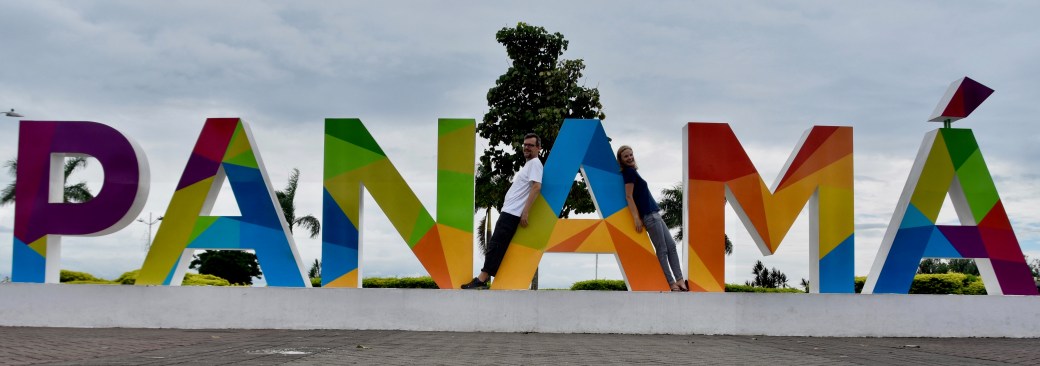 After 11 days in both Panama City and the countryside, we’ve learnt a few tidbits from this wonderful country that we will take away, remember and maybe even learn from. Some lessons we have already written about in previous posts – namely to always remember earplugs when staying in hostel dorms, every westerner living here has some kind of back story, how to once again evacuate a natural disaster area and finally, that Jen still doesn’t really like coffee, even when given the really good, expensive stuff. Below are 10 other bits of info, that we think characterise our time here. . .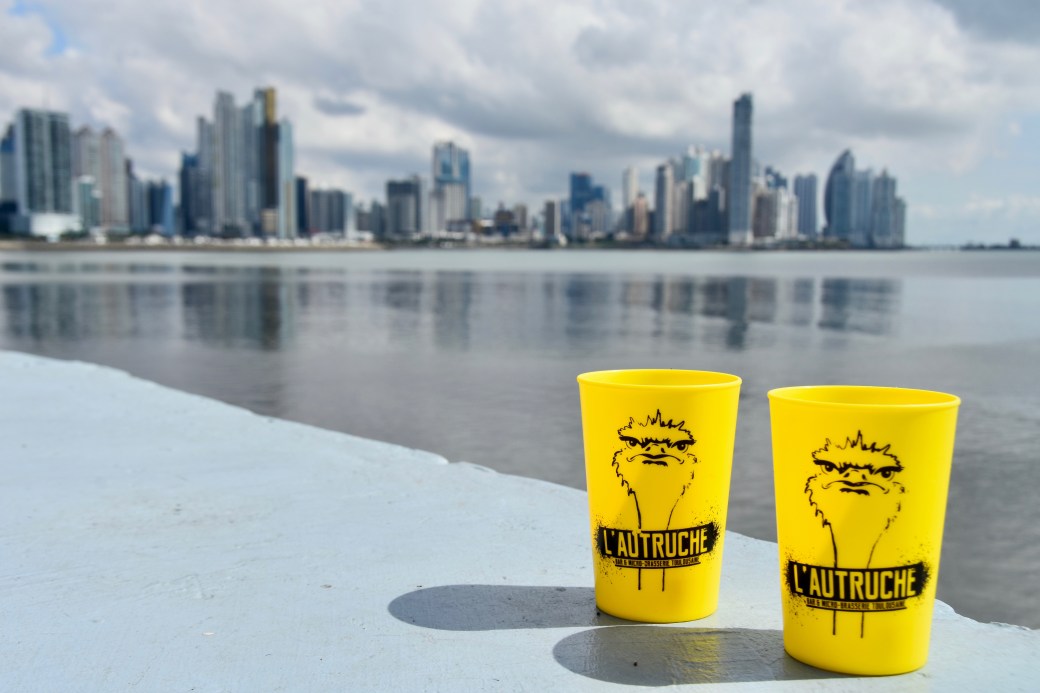







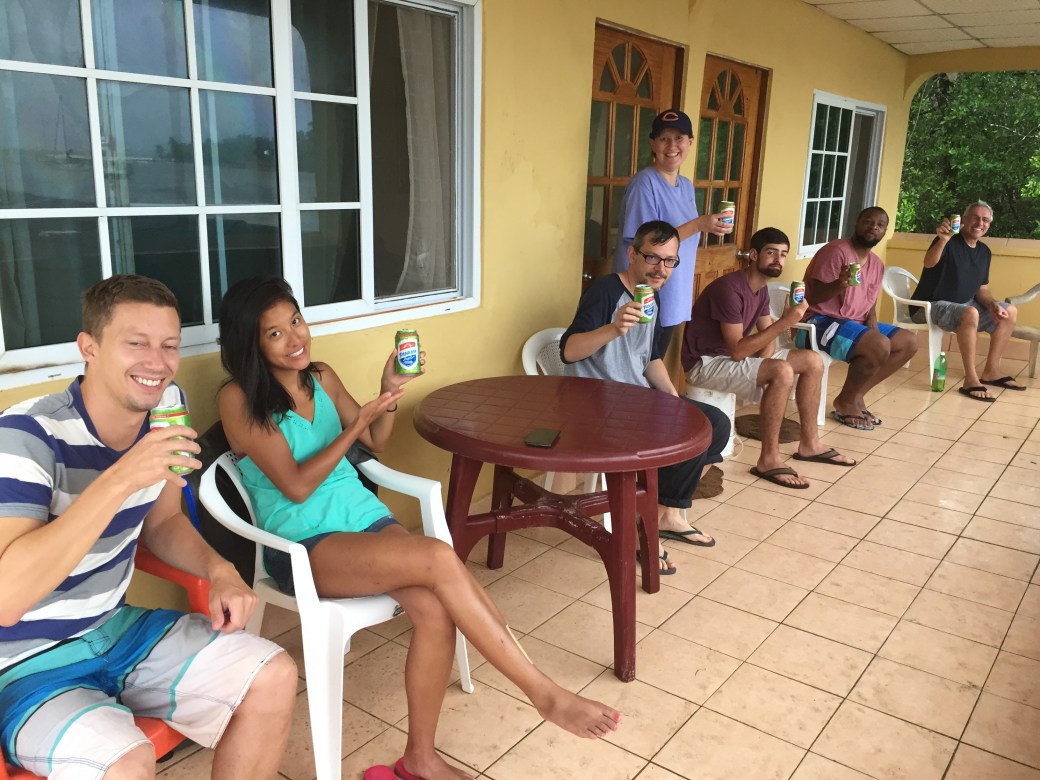
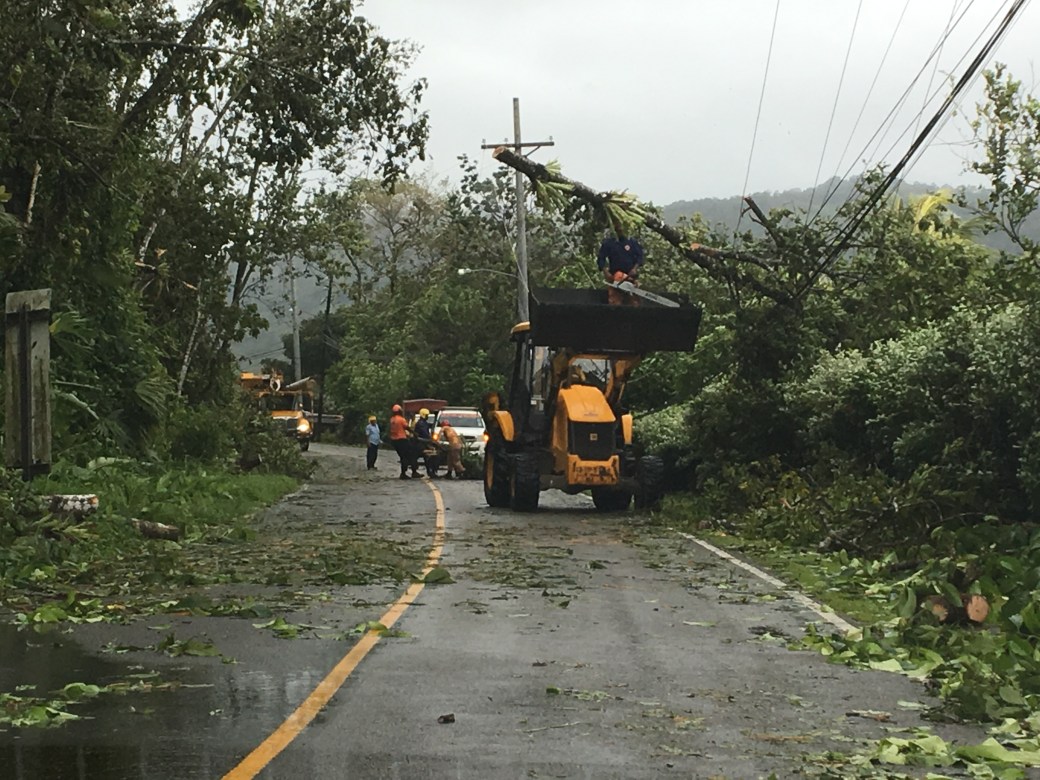
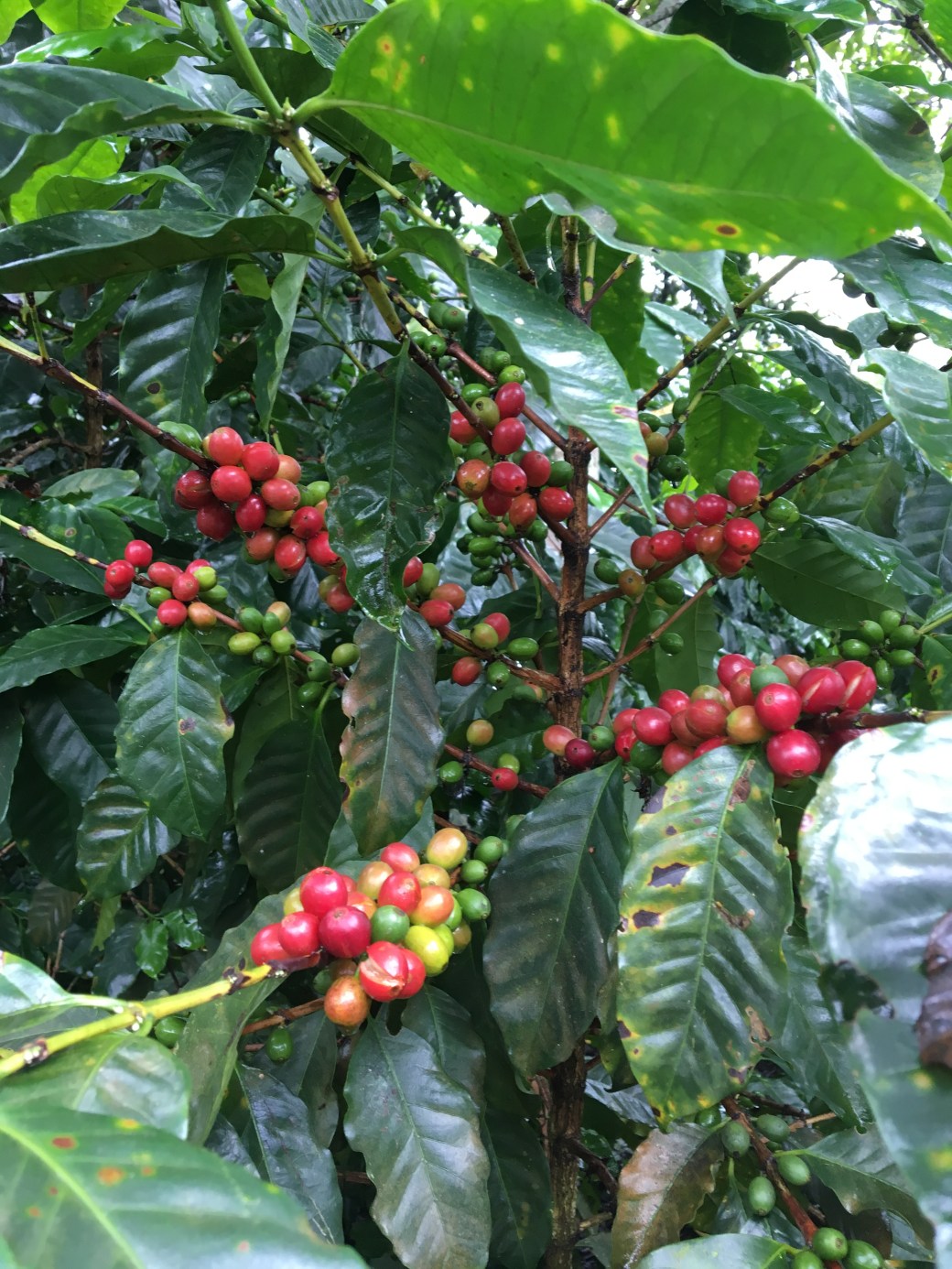







 Dear Georgie Boy